Australian Survivor contestant Rachael Downie has opened up about the online bullying she has experienced.
After featuring on the Channel 10 program she has faced a barrage of online abuse for her appearance and sexuality.
Twenty Four contestants started out the journey for Australian Survivor 2021.
But former Queensland Australian of the Year Rachel Downie made a strong showing before her elimination this week.
Powering through challenges and surviving multiple eliminations demonstrated her tenacity, but her true tests lay outside the program.
Rachel has spent considerable time advocating for young people and mental health in her professional life.
Her appearance on the program was about representing women, particularly women in their 50’s and queer women.
After a recent episode Rachel shared an image of herself from Australian Survivor in her bikini to instagram.
The moment was supposed to be empowering and uplifting to other women.
“I’m 50, I am strong and I am fit but I feel embarrassed about how I look because my body doesn’t reflect that” she wrote.
“However, being on this amazing show has given me a new sense of pride in what my body can do. Womens’ bodies are frikken’ amazing and my body has been really good to me.”
Despite supportive comments that flowed in, it wasn’t long before internet trolls came out to attack.
Several days later Rachel revealed the abuse she had been receiving.
“I have been told to go and kill myself five times today and the ways in which people have tried to shame my body and my sexuality is beyond belief” she posted on Instagram.
But Rachel was not letting these people get her down.
In her fiery response she took the time to remind people of the tool this abuse can take on others.
Assuring people that she was ok Rachel urged others to think about the impact their words could have and vowed to continue on with her work.
On 1 August 2021 Listening2Lesbians provided submissions in response to the following from the Commission on the Status of Women:
“Any individual, non-governmental organization, group or network may submit communications (complaints/appeals/petitions) to the Commission on the Status of Women containing information relating to alleged violations of human rights that affect the status of women in any country in the world. The Commission on the Status of Women considers such communications as part of its annual programme of work in order to identify emerging trends and patterns of injustice and discriminatory practices against women for purposes of policy formulation and development of strategies for the promotion of gender equality.”
Information was provided to the UN on incidents dating back approximately 2.5 years across the 57 countries we have reported on in that time.
Legal, social and familial punishment of lesbians for failing to conform with the expectations imposed on women illuminates the status of women around the world. Homosexuality is understood to be a breach of sex-based expectations. Strictly enforced sex roles are accompanied by increased consequences for those who break them, individually or collectively. Lesbians, or women read as lesbians, are doubly punishable for their non-conformity, both overt and inferred.
Listening2Lesbians is not an expert on these countries and provided this information to augment and support the information provided by women from individual communities. We can only provide information on cases we have been able to locate and based our submissions solely around the available facts. Please note that we welcome corrections and updates.
We are painfully aware of the many communities not represented.
Anyone with information on missing communities is invited to contact us with information on reporting violence and discrimination against lesbians in their community.
Natalí fears for her life and that of her mother. They live together in an apartment in the northern area [of La Florida] and she is certain that her neighbors want to evict them for her being lesbian. She has reported them for harassment and threats in court. For a month she has had a panic button that, she says, she has used on several occasions. “They physically and verbally assaulted us. They tell us that they want the apartment and that we must leave here,” she said.
Her 64-year-old mother was one of the first residents of the La Florida monoblock apartments and Natalí has lived there since she was born 35 years ago. According to her, in 2019 the harassment began. The final straw which resulted in her seeking justice was a neighbour threatening her with a firearm. “I got to my house and a neighbor came out, verbally abused me and told me I had to go. He pulled a gun from his waistband and put it to my head. My mum heard noises and opened the door. I took advantage of his distraction to escape and enter my house,” she recalled.
(Translated)
Natalí teme por su vida y la de su madre. Viven juntas en un departamento de zona norte y asegura que sus vecinos las quieren echar por lesbiana. Los denunció por hostigamiento y amenazas en la Justicia y desde hace un mes tiene un botón antipánico que, asegura, usó en varias oportunidades. “Nos agredieron física y verbalmente. Nos dicen que quieren el departamento y que nos vayamos de acá”, contó.
Su madre, de 64 años, fue una de las primeras adjudicatarias de los departamentos del monoblock de La Florida y Natalí vive ahí desde que nació, hace 35 años. Según contó, en 2019 empezaron los hostigamientos. El límite que la llevó a la Justicia fue la amenaza con un arma de fuego de parte de un vecino. “Llegué a mi casa y un vecino salió, me insultó y me dijo me tenía que ir. Saco un arma de su cintura y me la puso en la cabeza. Mi mamá escuchó ruidos y abrió la puerta. Yo aproveché su distracción para escapar y entrar”, recordó.
5 June 2021: The Viva Shopping Center publicly apologized in compliance with the Constitutional Court’s ruling T-068 of 2021. According to the ruling, “there is a pattern of discrimination aimed at people of the same sex who express affection in public.” The ruling is a response of the Constitutional Court to the case of a couple of lesbian women who are members of the LBT women’s collective “Rare not so Rare”.
(Translated)
El Centro Comercial Viva pidió disculpas públicas en cumplimiento de la sentencia T-068 de 2021 de la Corte Constitucional. De acuerdo a la sentencia “existe un patrón de discriminación que tiene como objeto a las personas del mismo sexo que realizan manifestaciones de afecto en público”. El fallo es una respuesta de la Corte Constitucional al caso de una pareja de mujeres lesbianas integrantes de la colectiva de mujeres LBT “Raras no tan Raras”.
On Tuesday night (15 June)Angela Ro Ro posted an outburst on her Instagram profile about the homophobic attacks she continues to receive on social networks. The singer, who is a lesbian, criticized the “haters” and made an appeal on behalf of the large number of people who are also affected by this type of discrimination. “I’m tired of being a lone victim. Unfortunately, there are many victims. Leave us alone. We are not martyrs. We are being human. Angela Ro Ro with great pride. Gay pride forever,” she said in the message.
(Translated)
Angela Ro Ro publicou em seu perfil no Instagram, na noite de terça-feira (15), um desabafo sobre os ataques homofóbicos que continua recebendo nas redes sociais. A cantora, que é lésbica, criticou os “haters” e fez um apelo em nome do grande número de pessoas que também são afetadas por esse tipo de discriminação.”Cansei de ser vítima solitária. Infelizmente muitas são as vítimas. Deixem-nos em paz. Não somos mártires. Somos serem humanos. Angela Ro Ro com muito orgulho. Gay pride forever [orgulho gay para sempre, em inglês]”, disse na mensagem.
Family, friends and members of the LGBTIQ+ community in Limpopo have been left reeling by the brutal rape and murder of a young lesbian community health worker, in what is suspected to be a hate crime.
A young lesbian community health worker was raped, stabbed multiple times and dumped alongside the road next to Helen Franz Hospital in the rural Senwabarwana area of Limpopo last week.
Thapelo Constance Sehata (23), of Desmond Park in Senwabarwana, was found on Wednesday (28 July 2021) unconscious and bleeding from severe stab wounds, just a short distance from the hospital.
She later succumbed to her injuries, following what her family and fellow members of the LGBTIQ+ community described as a hate crime motivated by her sexual identity. Police have confirmed the incident.
Sehata was a mother of a nine-year-old girl and worked as peer educator at the non-governmental organisation (NPO) Centre for Positive Care (CPC).
Her distraught older sister, Pretty Sehata (31), told Health-e News this week that the whole family, including their 63-year-old mother, was hurt beyond words.
“Thapelo was open about being lesbian and we accepted and loved her as our own in the family. Of course, there were some residents who would mock, insult and ridicule her for what she was. And here we are in pain today, mourning her brutal killing. She was raped, killed and dumped along the road as if she was not human,” said Pretty.
A teacher at a Christian school who came out as gay [sic] and was sacked has spoken out as the government prepares a new draft of the controversial Religious Discrimination Bill.
Steph Lentz said she began teaching at Covenant Christian School in the Sydney suburb of Belrose in 2017. She said it was her first job out of university.Advertisements
“I was employed there until January this year when I was sacked after I came out to the school,” Lentz told ABC Radio National.
“I was in a heterosexual marriage [when I started there]. Growing up in a very conservative Protestant environment, I believed for a long time heterosexual marriage was the only option for lifelong companionship.
“It was after the breakdown of my marriage and some real reflection and soul searching that I first came out to myself. I also shared this with my family.”
Lentz said she wanted to be honest with the school about her “affirming view of homosexual people and relationships.”
“I felt that in the spirit of integrity and to honour the agreement I was under, I informed the school,” she said.
“[My view] that it’s okay to be gay, God doesn’t have a problem with it [and] Christian schools need queer people of faith to be models for students and families.
“But that didn’t gel with the school I was teaching at.”
In a letter, the school told Steph Lentz she’d failed to affirm the school’s Statement of Belief. That statement includes the “immorality” of “homosexual practices”.
On Saturday afternoon, a video circulated on the internet showing Eddy Demarez making homophobic remarks towards the Belgian Cats as they arrived at the airport. The reporter said “there is only one straight on the team.” Not knowing he was on the air, he continued to say revolting things, comparing Billie Massey to “a mountain. Have you ever looked at her? She’s a colossus,” he said to a colleague before continuing his inappropriate monologue by making an inappropriate joke about Emma Meesseman and continuing to attack other players.
“The Mestdaghs, one is a lesbian, the other is not. Carpréaux is a man.”
Sporza and VRT have announced the immediate suspension of Eddy Demarez who will no longer comment until further notice.
(Translated)
Ce samedi après-midi, une vidéo a circulé sur internet. On y voit Eddy Demarez tenir des propos homophobes envers les Belgian Cats alors qu’elles arrivaient à l’aéroport. Le journaliste prétend “qu’il n’y a qu’une hétéro dans l’équipe.” Ne se sachant pas à l’antenne, il continue ensuite à tenir des propos nauséabonds en comparant Billie Massey à “une montagne. Tu l’as déjà bien regardée ? C’est une colosse”, déclare-t-il à l’un de ses confrères avant de poursuivre son monologue malsain en réalisant un jeu de mots douteux sur Emma Meesseman ou en continuant à attaquer d’autres joueuses.
“Les Mestdagh, une est lesbienne, l’autre pas. Carpréaux est un homme.”
Sporza et VRT ont annoncé la suspension immédiate d’Eddy Demarez qui ne commentera plus jusqu’à nouvel ordre. (Original)
A Kansas public school district has agreed to reforms, including publicizing of its anti-discrimination policies and training for its staff, after a student was disciplined and told she couldn’t ride a school bus for several days after she said she was a lesbian during a bus ride home.
The American Civil Liberties Union of Kansassent a letter to the superintendent of the North Lyon County Unified School District 251 on July 6 telling the district that the actions of school staff violated Title IX, the federal law that prohibits discrimination on the basis of sex in education programs and activities receiving federal funds.
The civil rights organization also said that the school violated 14-year-old Izzy Dieker’s rights under the First and 14th Amendments to the U.S. Constitution.
Based on an independent investigation conducted by the Kansas Association of School Boards, the ACLU letter said that several students riding a school bus were leaning in and out of the aisle and using profanities on Jan. 27.
Dieker, who was riding the bus, did none of those things, the letter notes. When she said, “I’m a lesbian,” the bus driver, Kristi Gadino, pulled the bus over and reprimanded Dieker, telling her, “Watch your language.” She added, “Do you think that these little kindergarteners need to know what that word means?”
After the bus ride, Gadino wrote up Dieker for disobeying the driver, using “unacceptable language,” and being rude or discourteous, and Izzy’s parents were told she would be temporarily suspended from riding the bus. The school principal told her and a teacher who advocated for her that despite the fact that video footage showed that Izzy had not been rude or disobedient, calling herself a lesbian was “inappropriate” and the suspension would stand.
A lesbian couple and their family, who were featured in an advert for a Russian supermarket chain that led to a national scandal have fled the country after facing online abuse and death threats.
Mother Yuma, daughters Mila and Alina, and Alina’s girlfriend Ksyusha have said they were forced to leave Russia for Spain after they featured in an ad in which they said they enjoyed VkusVill’s onigiri rice balls and hummus.
“Unfortunately, due to the complicated situation with VkusVill, we have been left without work and without a home,” wrote daughter Mila on Instagram, posting a picture from a balcony in Spain.
“Right now me and my family very much need to get settled in Barcelona. It’s a difficult time for us and we need friends,” she continued. “Maybe the friends of your friends or their friends can help us start our new life in Barcelona.”
The ad met with a conservative backlash in Russia, which passed a law in 2013 banning “gay propaganda”. VkusVill quickly pulled the advertisement and replaced it with one that featured heterosexual families. It issued a public apology and said the original ad “hurt the feelings of a large number of our customers and employees”.
After the ad’s removal, the family said they were targeted by a hate campaign, culminating in the four women fleeing to Spain in order to ensure their safety.
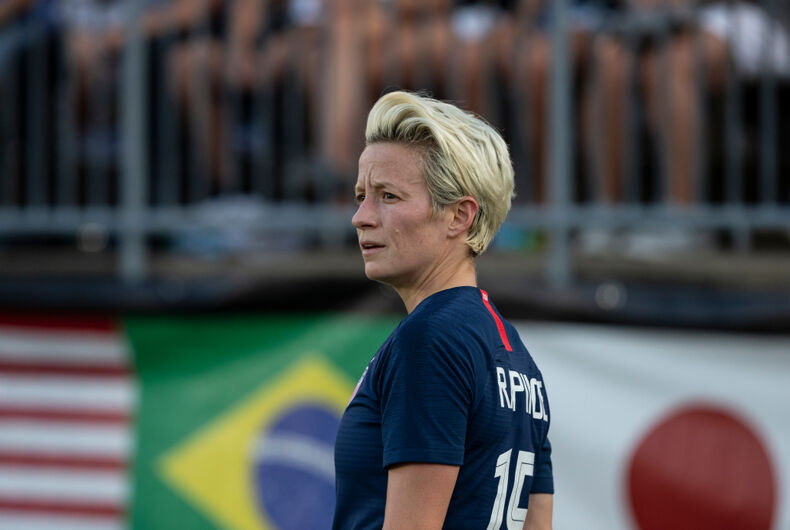
The American soccer team lost to Canada and [Candace] Owens decided to mock the loss, calling [Megan] Rapinoe “an anti-American piece of trash.” Rapinoe has kneeled before games as the national anthem is played in solidarity with players throughout sports demanding racial justice.
The national anthem is not played before an Olympic sporting event, but that didn’t stop Owens from spouting off. Responding to a tweet from U.S. Soccer’s Women’s National Team that called the loss “heartbreaking but hard-fought,” Owens replied that it was “not heartbreaking at all.”
She added that Rapinoe “does not represent our country, anywhere, ever. Any person who disrespects the the [sic] flag that sons and daughters are sent home beneath while fighting for our freedoms overseas, deserves to lose.”
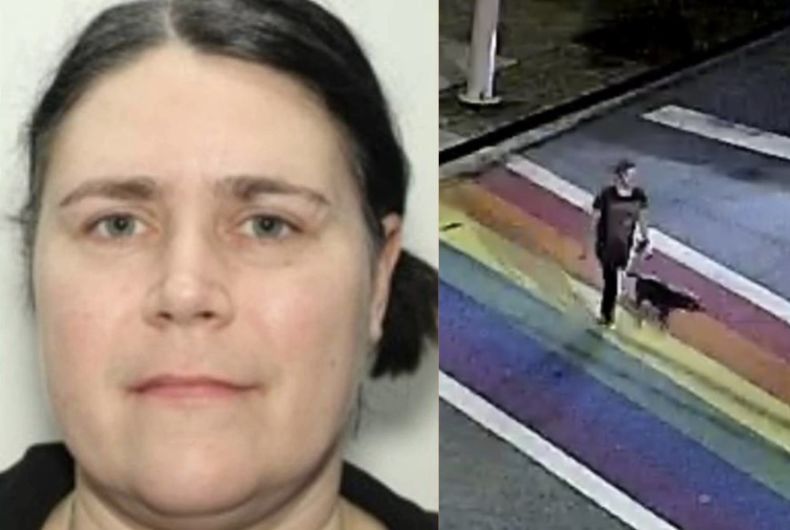
This past Wednesday at 1 a.m. in Piedmont Park the bodies of Katherine Janness, 40, and her dog Bowie were found. Janness had been stabbed multiple times, her face disfigured in the attack.
“She was the most intelligent, kind, humble, and beautiful person I have ever known. I wanted to spend every second with her,” her fiancee Emma Clark wrote on Facebook.
“Today I lost the love of my life and my baby boy. It was tragic.”
Janness – a bartender at the Campagnolo Restaurant and Bar in Atlanta – and Clark had dinner together on Tuesday evening and then Janness took Bowie for a walk. When she didn’t come home, Clark found her body by using an app to track her phone’s location in the park about a mile from their home.
Police searched the park for evidence and went door-to-door in the neighborhood to find witnesses. They returned to the park with diving gear to search a lake.
The last known picture of Janness shows her crossing a nearby rainbow crosswalk. Atlanta police released the image and are offering a $10,000 reward for information on the killing.
Nino, a 25-year-old lesbian from Georgia, no longer feels at ease when she leaves the house. Since violence forced a Pride march to be cancelled earlier this month, she is afraid of being verbally abused or chased in the street.
Reports of hate crimes have risen in the wake of the violence of July 5, when anti-Pride protesters assaulted journalists and stormed activists’ offices, and some LGBT+ Georgians say they are now living in fear.
“Things have changed. Life is no longer as simple as it once was,” Nino, 25, whose name has been changed to protect her identity, said from the home she shares with her partner in the capital, Tbilisi.
“You’re more afraid that someone on the street will chase you and hurl abuse at you. You can no longer be so cheerful. You have an inner fear. It’s as if some tragedy is coming to you,” she told the Thomson Reuters Foundation.
The homophobic violence that halted a planned “March for Dignity” has also raised political tensions in the former Soviet country as it prepares for an October local election – sparking protest rallies and scuffles in parliament.
Prime Minister Irakli Garibashvili has rejected calls to resign from rights activists and opposition parties, who have accused his government of emboldening hate groups and failing to protect journalists and LGBT+ supporters.
In the run-up to the Pride events, Garibashvili said holding the LGBT+ march was “not reasonable” because most Georgians opposed it, and has since described the cancelled event as a “provocation” organised by the opposition.
Over the weekend, posters depicting opposition figures and the head of Tbilisi Pride under a rainbow splattered with blood sprang up across the capital.
The owner of the popular nightclub Nordic Bar said he is investigating claims that its bouncers kicked out and beat two women for sharing a kiss.
“We are carrying out our own investigations on the matter as well as collaborating with the police. This is a very serious matter,” the owner told Times of Malta adding that he would not be saying more until investigations are concluded.
The Malta Gay Rights Movement (MGRM) first flagged the issue after a woman recounted her “horrendous experience” at the bar on a Facebook group on Monday evening.
The woman said that once she and her partner were at the bar, they were asked to sit by the table due to COVID-19 restrictions.
“We shared a kiss and soon enough one of the bouncers came to our table to kick us out,” the woman said. She said that as she and her partner were not sure why they were being thrown out, they both resisted and asked for a reason.
But the bouncer threw both of them to the ground and kicked them as he held them down, she said.
She added that she was “disgusted” by the way they were treated and that she had never experienced such homophobic abuse before.
In a survey, MGRM had found that half of the LGBTQ+ community find Paceville unsafe, and that many have experienced aggression from bouncers.
“At this point we advice the community not to go to this venue unless action is taken that guarantees our safety,” MGRM said in a Facebook post. The NGO said it will accompany anyone to a police station if they have been victims of abuse and will also offer free legal service and follow-ups.
Just a few hours after the Olympic Games’ Opening Ceremony, the volleyball champion [Katarzyna Skorupa], gave an interview to the Polish outlet Przeglad Sportowy. Katarzyna Skorupa was speaking openly about her homosexuality and how the sports world is still bigoted. “Homosexuals are often discriminated against by clubs or federations. Sometimes a lesbian is the second choice, even if her performance on the pitch indicates that she should be the first”, Skorupa declared loudly. She specified that since she openly stated that she’s a lesbian, “I made choices and I have paid for them”.
Just last March, the volleyball player clearly stated on the pages of the weekly Wprost that she was discriminated against not only on the pitch, but also in everyday life. “We live in a xenophobic, homophobic and closed society.” (Translated)
A poche ore dalla cerimonia inaugurale dei giochi olimpici, la campionessa di pallavolo ha però rilasciato una intervista al portale polacco Przeglad Sportowy Katarzyna Skorupa parlando apertamente della sua omosessualità e di come il mondo dello sport sia ancora bigotto. “Gli omosessuali sono spesso discriminati da club o federazioni. A volte una lesbica è la seconda scelta, anche se il suo atteggiamento in campo indica che dovrebbe essere la prima” – ha detto a gran voce la Skorupa che da quando ha dichiarato apertamente di essere lesbica ha precisato “ho fatto delle scelte e le ho pagate”.
Proprio lo scorso marzo, la pallavolista dalle pagine del settimanale Wprost aveva chiaramente dichiarato di essere stata discriminata non solo in campo, ma anche nella vita di tutti i giorni. “Viviamo in una società xenofoba, omofoba e chiusa.
Claudia had to leave El Salvador because her life was at risk. There she was in danger as a woman and as a lesbian – dual reasons to die she says. For this reason, she is now taking refuge in a country that constantly feels alien to her, although it protects her human rights. She is free, but she feels lonely. Given that, she hopes that in El Salvador LGBT people will not always have to give up something, everything, just to live without fear.
Claudia, who for security reasons prefers to remain anonymous, is an activist and human rights defender. In this interview, she talks about the implications of being an LGBT person in a country like El Salvador, where, among other things, hatred, violence and impunity reign. In addition, she explains how the actions of governments which, far from progressing, insist on going backwards, affect the LGBT community. And she explains what it means to live in a place where human rights aren’t an aspiration but a fact. That place, of course, is far, far from being El Salvador. …
What does it mean to belong to the LGBT + community in a country like El Salvador?
Death. That is what it means to be part of the LGTB community in El Salvador. …
Did your departure from the country have to do with your being a rights defender or your sexual orientation?
It was both. I can’t reveal many details, but it was the violence in El Salvador that forced me to leave. I’d continue the fight, but what would that cost? Perhaps my life? Saying: “No, enough is enough” was a super difficult decision, but it was because of crime, the lack of rights and, above all, because of the violence experienced by the LGBT community. There is a horrible widespread violence, in all aspects and in all sectors of the population.
Would you return to El Salvador?
Never.
Why not?
Because in El Salvador we are light years away from changing our mentality. We have nothing there. I don’t have a future in El Salvador. And I would not return to lose the freedom that I now have. I am a refugee woman. Two months after I arrived here, my brother was murdered in El Salvador. El Salvador hurt me a lot. I am proud to be a Salvadoran lesbian woman, very proud to tell everyone that I am from El Salvador. However, the living conditions that I have in this country I would not have there as an LGBT woman. I cannot do anything. And it is a very difficult situation because I love my country. I would like to be in my country and not here where I am, but there I have no guarantees of anything. (Translated)
Claudia tuvo que salir de El Salvador porque su vida estaba en riesgo. Aquí, corría peligro por ser mujer y por ser lesbiana. Eso le valdría, dice, estar muerta dos veces. Por eso, ahora se refugia en un país que, aunque le garantiza derechos humanos, no deja de parecerle ajeno. Es libre, pero se siente sola. Y, ante eso, anhela que en El Salvador las personas de la población LGBT+ no tengan que renunciar a algo, a todo, para poder vivir sin miedo.
Claudia, quien por seguridad prefiere mantener el anonimato, es activista y defensora de derechos humanos. En esta entrevista, habla de las implicaciones de ser población LGBT+ en un país como El Salvador, en el que, entre otras cosas, reinan el odio, la violencia y la impunidad. Además, explica cómo afectan a la comunidad LGBT+ las acciones de los gobiernos que, lejos de avanzar, se empeñan en retroceder. Y cuenta cómo se vive en un lugar en el que los derechos humanos dejan de ser una aspiración y se convierten en un hecho. Ese lugar, claro, está lejos, muy lejos de El Salvador….
¿Qué significa pertenecer a la comunidad LGBT+ en un país como El Salvador?
Muerte. Eso significa ser parte de la comunidad LGTB+ en El Salvador. …
¿Su salida del país tuvo que ver con que usted es defensora de derechos o con su orientación sexual?
Fueron las dos cosas. No puedo revelar muchos detalles, pero fue la violencia en El Salvador la que me sacó de ahí. Yo estaría en pie de lucha, ¿pero cuál sería el costo de eso? A lo mejor sería mi vida. Decir: “No, basta ya”, fue una decisión súper difícil, pero fue por la delincuencia, la falta de derechos y, sobre todo, por la violencia que se vive para la comunidad LGBT+. Hay una violencia generalizada horrible, en todos los aspectos y en todos los sectores de la población.
¿Regresaría a El Salvador?
Jamás.
¿Por qué no?
Porque en El Salvador estamos a años luz de cambiar de mentalidad. No tenemos nada en ese país. Yo no tengo un futuro en El Salvador. Y no regresaría a perder la libertad que ahora tengo. Soy una mujer refugiada, y a los dos meses de haber llegado acá, en El Salvador asesinaron a mi hermano. El Salvador me duele mucho. Yo estoy orgullosa de ser una mujer lesbiana salvadoreña, pero orgullosísima de decirle a todo el mundo que soy de El Salvador. Sin embargo, las condiciones de vida que tengo en este país no las podría tener allá siendo una mujer LGBT+. No puedo hacer nada. Y es una situación bien difícil porque yo amo mi país. Quisiera estar en mi país y no aquí donde estoy, pero allá no tengo garantías de nada.
Insulted and beaten bloody for looking too much at the attackers’ girlfriends. The subject of the latest homophobic violence was a young woman who was with her partner last Friday in the Roman Gay Street, which is the main road of San Giovanni which connects the Basilica to the Colosseum. She was there to spend a few hours quietly, having a relaxed drink and a chat with her girlfriend. She could not imagine the turn that the evening would take. It was an ending, unfortunately, which is similar to the many others that have been increasing in number recently throughout Italy, from north to south, in a series of offenses and attacks against the LGBTQ community.
After the attacks in the Neapolitan area, in Milan, and in Tuscany, this most recent one happened in the heart of the capital a few days ago. This incident was reported by the actor Pietro Turano, activist and vice president of the Roman chapter of Arcigay. On his Facebook page he recounted the episode he partially witnessed. A young lesbian was targeted by two contemporaries who allegedly first verbally abused her and then attacked her with a small knife, wounding her in different parts of her body. (Translated)
Insultata e colpita a sangue per uno sguardo di troppo rivolto alle fidanzate degli aggressori. Protagonista dell’ultima violenza omofoba una ragazza che lo scorso venerdì si trovava insieme alla sua compagna nella Gay Street romana, ovvero lo stradone di San Giovanni che collega la Basilica al Colosseo. Era lì per per trascorrere qualche ora tranquillamente, a bere un bicchiere e chiacchierare in totale relax con la sua ragazza ma non immaginava minimamente la piega che avrebbe preso la serata. Un epilogo, purtroppo, simile a tanti altri che negli ultimi tempi si stanno moltiplicando un po’ in tutta Italia, da nord a sud. Con una sequela di offese e aggressioni contro la comunità Lgbtq+.
Dopo gli attacchi nel Napoletano, a Milano e in Toscana l’ultimo nel cuore della Capitale qualche giorno fa. A denunciarlo l’attore Pietro Turano, attivista e vice presidente dell’Arcigay romana. Sulla sua pagina Facebook ha raccontato l’episodio del quale è stato in parte testimone: una giovane lesbica presa di mira da due coetanei che l’avrebbero prima insultata e poi aggredita con un coltellino ferendola in diverse parti del corpo. (Original)
Many homophobic people in Cameroon believe that LGBTI community centers aren’t merely meeting places for LGBTI people, but are used to promote homosexuality. Same-sex sexual relations are against the law in Cameroon.
The latest victim of this mistaken belief is the Association for the Advancement of Women (AVAF), an organization in Yaoundé, Cameroon, that defends lesbians’ rights.
AVAF reported that “on the night of July 11 to 12, 2021 (Sunday to Monday), unidentified individuals broke into the premises by smashing [into] the office of the Administrative and Financial Director.”
The vandals set a fire in that office and burned financial and activity reports. Various documents were stolen along with financial securities of as-yet unknown value.
AVAF staff and community members are worried because private contact information and perhaps compromising documents have been taken. They fear that their identity will be published.
Unknown people threw paint over the walls of the bar, with the sole intention of erasing murals showing the faces of victims of lesbophobic murder.
The LGBTIQ Chueca Bar, located in Rancagua 406, Providencia commune, suffered a lesbophobic attack at dawn on Thursday [22 July], an attack which was denouced by the Homosexual Integration and Liberation Movement (Movilh).
The owners of the building said that “in a clearly premeditated and calculated act”, three people, as yet unidentified, painted the walls of the building white to erase murals with the faces of Nicole Saavedra and Ana Cook, both murdered in lesbophobic attacks, “as well as the mural that showed a woman of African descent, a non-binary person and a drag king”.
“These acts make us feel more and more unsafe. Chueca is a space created for lesbians, a safe place for dissent and where solely women work. Clearly, this is intimidation.” (Translated)
Desconocidos lanzaron pintura sobre la fachada del lugar, con el único ánimo de borrar pinturas con rostros de víctimas fatales de la lesbofobia.
Un ataque lesbofóbico sufrió la madrugada del jueves el bar LGBTIQ+ Chueca Bar, ubicado en Rancagua 406, comuna de Providencia, hecho que fue repudiado hoy por el Movimiento de Integración y Liberación Homosexual (Movilh).
Las dueñas del recinto precisaron que “en un acto claramente premeditado y calculado”, tres sujetos, aún sin identificar, pintaron de blanco la fachada del recinto con el fin de borrar pinturas con los rostros de Nicole Saavedra y Ana Cook, ambas víctimas fatales de la lesbofobia, “al igual que el mural que mostraba una mujer afrodescendiente, una persona no binaria y una drag King”.
“Estos actos hacen que cada vez nos sintamos más inseguras. Chueca es un espacio creado para las lesbianas, un lugar seguro para la disidencia y donde trabajamos puras mujeres. Claramente, esto es amedrentamiento.” (Original)
Requests for a memorial token to commemorate lesbian prisoners in the former Ravensbrück women’s concentration camp have been submitted as far back as 2012. Now the management of the Ravensbrück Memorial and the Board of Directors of the Brandenburg Memorials Foundation have finally approved the installation, as announced by the foundation in a press release on July 14th.
The memorial is to be in the shape of a ceramic ball which will be permanently placed on the new memorial area on the former camp wall in spring 2022, as part of the observance of the 77th anniversary of the camp’s liberation. The inscription reads: “In memory of all lesbian women and girls in the Ravensbrück and Uckermark women’s concentration camps. They were persecuted, imprisoned and even murdered. You are not forgotten.”
Heated Debate: Have Lesbians Been Persecuted?
This decision was preceded by a decade-long dispute over recognition of a lesbian memorial. Applications for a memorial had been rejected by the Brandenburg Memorials Foundation for a long time on the grounds that, according to the criminal law of the Nazi state, only men were criminalized for homosexual acts and brought to the concentration camp for this. There was no comparable persecution of lesbian women under criminal law in Germany. The LSVD spokesman at the time, Alexander Zinn, therefore claimed that a memorial sign for lesbian women would create the “myth of lesbian persecution”.
As Marion Lüttig, head of the Lesbenring, explained in a press release today, how lesbian women and girls were considered “because of their independence they were considered to be ‘degenerate’ and anti-social during the Nazi era. They were psychiatricized, forced into prostitution in camps and imprisoned.” Lesbian acts were also punishable in the camps. The suffering and persecution of lesbian women under National Socialism have only been dealt with in part, to this day. This is also due to the difficulty of getting such research projects funded at all, as historian Claudia Schoppmann told our sister magazine Victory Column in 2018.
…
Lesbian Ring: “Undignified debate has finally come to an end”
LesbenRing board member Marion Lüttig was delighted with the decision: “We are relieved that the unworthy debate about whether lesbians have ever been persecuted and the years of rejection of a memorial sign are finally over. With the decision of the foundation to install the memorial orb, over three quarters of a century after the liberation of the camp, the suffering of lesbian women and girls is finally made visible. “
The LesbenRing criticizes the fact that lesbian history is hardly present in the historiography of mainstream society. The persecution and murder of lesbian women during the Nazi era was and is still denied. “To this day, the massive hostility towards homosexuality, in the context of which the traditional testimonies are shaped, determines the politics of rememberance and research.” (Translated)
Bereits seit 2012 liegen Anträge für ein Gedenkzeichen vor, das an lesbische Häftlinge des ehemaligen Frauen-Konzentrationslager Ravensbrück erinnern soll. Nun haben die Leitung der Gedenkstätte Ravensbrück und der Vorstand der Stiftung Brandenburgische Gedenkstätten einem entsprechenden Antrag doch noch zugestimmt. Das gab die Stiftung in einer Pressemitteilung vom 14. Juli bekannt.
Das Gedenkzeichen soll die Form einer aus Keramik gestalteten Kugel haben und im Frühjahr 2022, im Rahmen der Feierlichkeiten zum 77. Jahrestag der Befreiung, auf dem neuen Gedenkareal an der ehemaligen Lagermauer dauerhaft niedergelegt werden. Die Inschrift lautet: „In Gedenken aller lesbischer Frauen und Mädchen im Frauen-KZ Ravensbrück und Uckermark. Sie wurden verfolgt, inhaftiert, auch ermordet. Ihr seid nicht vergessen.“
Hitzige Debatte: Wurden Lesben verfolgt?
Vorangegangen war ein jahrzehntelanger Streit um die Anerkennung lesbischen Gedenkens. Anträge für ein Gedenkzeichen waren von der Stiftung Brandenburgische Gedenkstätten lange abgelehnt worden – mit der Begründung, dass nach dem Strafrecht des NS-Staats allein Männer aufgrund homosexueller Handlungen kriminalisiert und dafür ins KZ gebracht wurden. Eine vergleichbare Verfolgung lesbischer Frauen nach dem Strafrecht gab es in Deutschland nicht. Der damlige Sprecher des LSVD, Alexander Zinn, behauptete deswegen, mit einem Gedenkzeichen für lesbische Frauen würde die „Legende einer Lesbenverfolgung“ geschaffen.
Wie Marion Lüttig, Vorständin des Lesbenrings, heute in einer Pressemitteilung ausführte, galten lesbische Frauen und Mädchen in der Zeit des Nationalsozialismus allerdings „durch ihre Unabhängigkeit als ,entartet` und asozial. Sie wurden psychiatrisiert, zur Prostitution in Lagern gezwungen und inhaftiert.“ Auch standen in den Lagern lesbische Handlungen unter Strafe. Das Leid und die Verfolgung lesbischer Frauen im Nationalsozialismus sind bis heute nur lückenhaft aufgearbeitet. Auch aufgrund der Schwierigkeit, entsprechende Forschungsprojekte überhaupt finanziert zu bekommen, wie die Historikerin Claudia Schoppmann 2018 unserem Schwestermagazin Siegessäule erzählte.
…
LesbenRing: „Unwürdige Debatte hat endlich ein Ende“
LesbenRing-Vorständin Marion Lüttig freute sich sehr über die Entscheidung: „Wir sind erleichtert, dass die unwürdige Debatte, ob Lesben je verfolgt worden seien, und die jahrelange Ablehnung eines Gedenkzeichens endlich ein Ende haben. Mit der Entscheidung der Stiftung für die Gedenkkugel wird das Leid von lesbischen Frauen und Mädchen über ein dreiviertel Jahrhundert nach der Befreiung des Konzentrationslagers endlich sichtbar gemacht.“
Der LesbenRing kritisiert, das lesbische Geschichte in der Geschichtsschreibung der Mehrheitsgesellschaft kaum präsent sei. So wurde und werde die Verfolgung und Ermordung lesbischer Frauen in der NS-Zeit geleugnet. „Bis heute bestimmt die massive Homosexuellenfeindlichkeit, von der die Mehrheit der überlieferten Zeugnisse geprägt ist, Erinnerungspolitik und Forschung.“










 Listening to Lesbians