Nino, a 25-year-old lesbian from Georgia, no longer feels at ease when she leaves the house. Since violence forced a Pride march to be cancelled earlier this month, she is afraid of being verbally abused or chased in the street.
Reports of hate crimes have risen in the wake of the violence of July 5, when anti-Pride protesters assaulted journalists and stormed activists’ offices, and some LGBT+ Georgians say they are now living in fear.
“Things have changed. Life is no longer as simple as it once was,” Nino, 25, whose name has been changed to protect her identity, said from the home she shares with her partner in the capital, Tbilisi.
“You’re more afraid that someone on the street will chase you and hurl abuse at you. You can no longer be so cheerful. You have an inner fear. It’s as if some tragedy is coming to you,” she told the Thomson Reuters Foundation.
The homophobic violence that halted a planned “March for Dignity” has also raised political tensions in the former Soviet country as it prepares for an October local election – sparking protest rallies and scuffles in parliament.
Prime Minister Irakli Garibashvili has rejected calls to resign from rights activists and opposition parties, who have accused his government of emboldening hate groups and failing to protect journalists and LGBT+ supporters.
In the run-up to the Pride events, Garibashvili said holding the LGBT+ march was “not reasonable” because most Georgians opposed it, and has since described the cancelled event as a “provocation” organised by the opposition.
Over the weekend, posters depicting opposition figures and the head of Tbilisi Pride under a rainbow splattered with blood sprang up across the capital.
The owner of the popular nightclub Nordic Bar said he is investigating claims that its bouncers kicked out and beat two women for sharing a kiss.
“We are carrying out our own investigations on the matter as well as collaborating with the police. This is a very serious matter,” the owner told Times of Malta adding that he would not be saying more until investigations are concluded.
The Malta Gay Rights Movement (MGRM) first flagged the issue after a woman recounted her “horrendous experience” at the bar on a Facebook group on Monday evening.
The woman said that once she and her partner were at the bar, they were asked to sit by the table due to COVID-19 restrictions.
“We shared a kiss and soon enough one of the bouncers came to our table to kick us out,” the woman said. She said that as she and her partner were not sure why they were being thrown out, they both resisted and asked for a reason.
But the bouncer threw both of them to the ground and kicked them as he held them down, she said.
She added that she was “disgusted” by the way they were treated and that she had never experienced such homophobic abuse before.
In a survey, MGRM had found that half of the LGBTQ+ community find Paceville unsafe, and that many have experienced aggression from bouncers.
“At this point we advice the community not to go to this venue unless action is taken that guarantees our safety,” MGRM said in a Facebook post. The NGO said it will accompany anyone to a police station if they have been victims of abuse and will also offer free legal service and follow-ups.
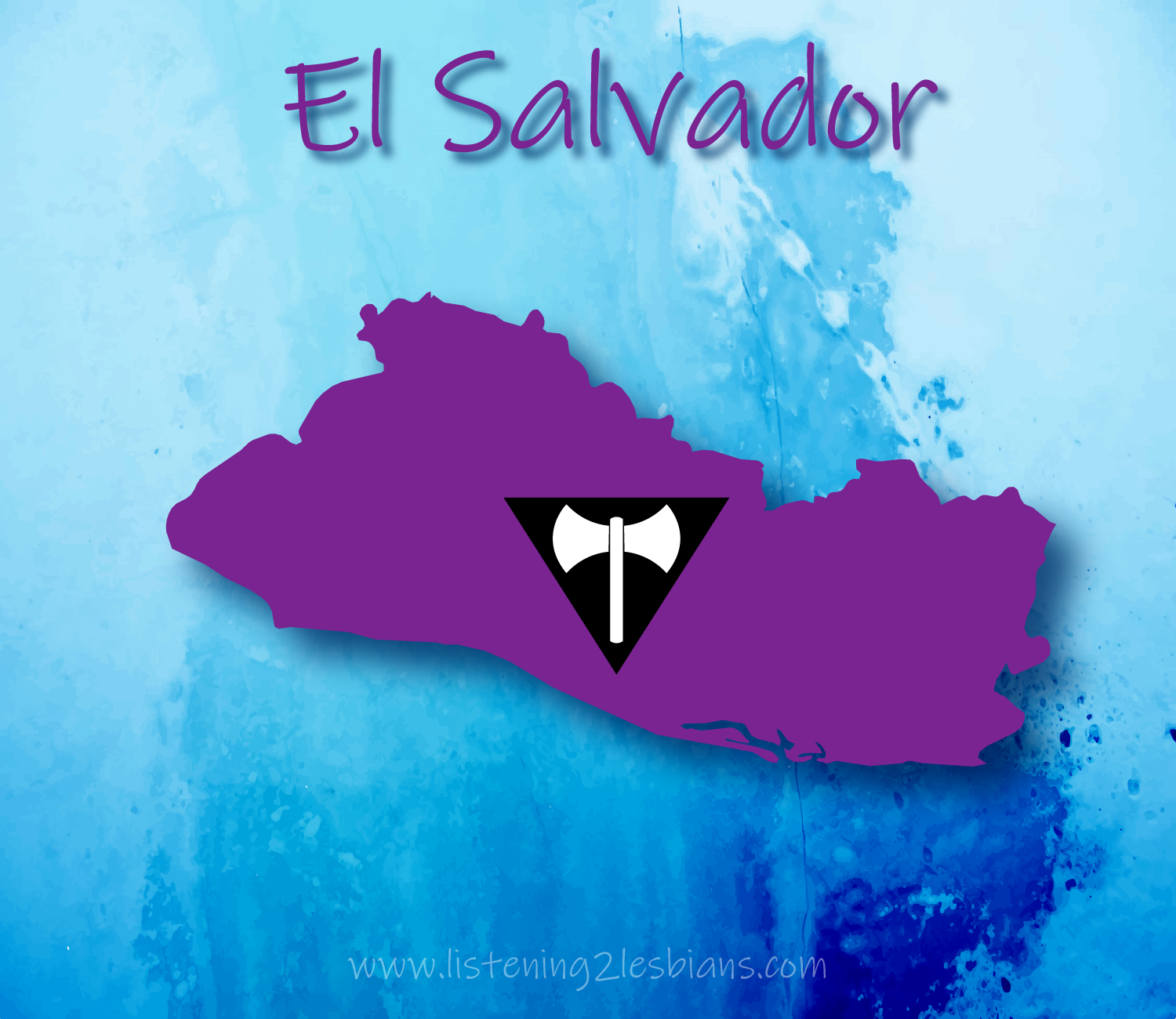
Claudia had to leave El Salvador because her life was at risk. There she was in danger as a woman and as a lesbian – dual reasons to die she says. For this reason, she is now taking refuge in a country that constantly feels alien to her, although it protects her human rights. She is free, but she feels lonely. Given that, she hopes that in El Salvador LGBT people will not always have to give up something, everything, just to live without fear.
Claudia, who for security reasons prefers to remain anonymous, is an activist and human rights defender. In this interview, she talks about the implications of being an LGBT person in a country like El Salvador, where, among other things, hatred, violence and impunity reign. In addition, she explains how the actions of governments which, far from progressing, insist on going backwards, affect the LGBT community. And she explains what it means to live in a place where human rights aren’t an aspiration but a fact. That place, of course, is far, far from being El Salvador. …
What does it mean to belong to the LGBT + community in a country like El Salvador?
Death. That is what it means to be part of the LGTB community in El Salvador. …
Did your departure from the country have to do with your being a rights defender or your sexual orientation?
It was both. I can’t reveal many details, but it was the violence in El Salvador that forced me to leave. I’d continue the fight, but what would that cost? Perhaps my life? Saying: “No, enough is enough” was a super difficult decision, but it was because of crime, the lack of rights and, above all, because of the violence experienced by the LGBT community. There is a horrible widespread violence, in all aspects and in all sectors of the population.
Would you return to El Salvador?
Never.
Why not?
Because in El Salvador we are light years away from changing our mentality. We have nothing there. I don’t have a future in El Salvador. And I would not return to lose the freedom that I now have. I am a refugee woman. Two months after I arrived here, my brother was murdered in El Salvador. El Salvador hurt me a lot. I am proud to be a Salvadoran lesbian woman, very proud to tell everyone that I am from El Salvador. However, the living conditions that I have in this country I would not have there as an LGBT woman. I cannot do anything. And it is a very difficult situation because I love my country. I would like to be in my country and not here where I am, but there I have no guarantees of anything. (Translated)
Claudia tuvo que salir de El Salvador porque su vida estaba en riesgo. Aquí, corría peligro por ser mujer y por ser lesbiana. Eso le valdría, dice, estar muerta dos veces. Por eso, ahora se refugia en un país que, aunque le garantiza derechos humanos, no deja de parecerle ajeno. Es libre, pero se siente sola. Y, ante eso, anhela que en El Salvador las personas de la población LGBT+ no tengan que renunciar a algo, a todo, para poder vivir sin miedo.
Claudia, quien por seguridad prefiere mantener el anonimato, es activista y defensora de derechos humanos. En esta entrevista, habla de las implicaciones de ser población LGBT+ en un país como El Salvador, en el que, entre otras cosas, reinan el odio, la violencia y la impunidad. Además, explica cómo afectan a la comunidad LGBT+ las acciones de los gobiernos que, lejos de avanzar, se empeñan en retroceder. Y cuenta cómo se vive en un lugar en el que los derechos humanos dejan de ser una aspiración y se convierten en un hecho. Ese lugar, claro, está lejos, muy lejos de El Salvador….
¿Qué significa pertenecer a la comunidad LGBT+ en un país como El Salvador?
Muerte. Eso significa ser parte de la comunidad LGTB+ en El Salvador. …
¿Su salida del país tuvo que ver con que usted es defensora de derechos o con su orientación sexual?
Fueron las dos cosas. No puedo revelar muchos detalles, pero fue la violencia en El Salvador la que me sacó de ahí. Yo estaría en pie de lucha, ¿pero cuál sería el costo de eso? A lo mejor sería mi vida. Decir: “No, basta ya”, fue una decisión súper difícil, pero fue por la delincuencia, la falta de derechos y, sobre todo, por la violencia que se vive para la comunidad LGBT+. Hay una violencia generalizada horrible, en todos los aspectos y en todos los sectores de la población.
¿Regresaría a El Salvador?
Jamás.
¿Por qué no?
Porque en El Salvador estamos a años luz de cambiar de mentalidad. No tenemos nada en ese país. Yo no tengo un futuro en El Salvador. Y no regresaría a perder la libertad que ahora tengo. Soy una mujer refugiada, y a los dos meses de haber llegado acá, en El Salvador asesinaron a mi hermano. El Salvador me duele mucho. Yo estoy orgullosa de ser una mujer lesbiana salvadoreña, pero orgullosísima de decirle a todo el mundo que soy de El Salvador. Sin embargo, las condiciones de vida que tengo en este país no las podría tener allá siendo una mujer LGBT+. No puedo hacer nada. Y es una situación bien difícil porque yo amo mi país. Quisiera estar en mi país y no aquí donde estoy, pero allá no tengo garantías de nada.
Many homophobic people in Cameroon believe that LGBTI community centers aren’t merely meeting places for LGBTI people, but are used to promote homosexuality. Same-sex sexual relations are against the law in Cameroon.
The latest victim of this mistaken belief is the Association for the Advancement of Women (AVAF), an organization in Yaoundé, Cameroon, that defends lesbians’ rights.
AVAF reported that “on the night of July 11 to 12, 2021 (Sunday to Monday), unidentified individuals broke into the premises by smashing [into] the office of the Administrative and Financial Director.”
The vandals set a fire in that office and burned financial and activity reports. Various documents were stolen along with financial securities of as-yet unknown value.
AVAF staff and community members are worried because private contact information and perhaps compromising documents have been taken. They fear that their identity will be published.
Requests for a memorial token to commemorate lesbian prisoners in the former Ravensbrück women’s concentration camp have been submitted as far back as 2012. Now the management of the Ravensbrück Memorial and the Board of Directors of the Brandenburg Memorials Foundation have finally approved the installation, as announced by the foundation in a press release on July 14th.
The memorial is to be in the shape of a ceramic ball which will be permanently placed on the new memorial area on the former camp wall in spring 2022, as part of the observance of the 77th anniversary of the camp’s liberation. The inscription reads: “In memory of all lesbian women and girls in the Ravensbrück and Uckermark women’s concentration camps. They were persecuted, imprisoned and even murdered. You are not forgotten.”
Heated Debate: Have Lesbians Been Persecuted?
This decision was preceded by a decade-long dispute over recognition of a lesbian memorial. Applications for a memorial had been rejected by the Brandenburg Memorials Foundation for a long time on the grounds that, according to the criminal law of the Nazi state, only men were criminalized for homosexual acts and brought to the concentration camp for this. There was no comparable persecution of lesbian women under criminal law in Germany. The LSVD spokesman at the time, Alexander Zinn, therefore claimed that a memorial sign for lesbian women would create the “myth of lesbian persecution”.
As Marion Lüttig, head of the Lesbenring, explained in a press release today, how lesbian women and girls were considered “because of their independence they were considered to be ‘degenerate’ and anti-social during the Nazi era. They were psychiatricized, forced into prostitution in camps and imprisoned.” Lesbian acts were also punishable in the camps. The suffering and persecution of lesbian women under National Socialism have only been dealt with in part, to this day. This is also due to the difficulty of getting such research projects funded at all, as historian Claudia Schoppmann told our sister magazine Victory Column in 2018.
…
Lesbian Ring: “Undignified debate has finally come to an end”
LesbenRing board member Marion Lüttig was delighted with the decision: “We are relieved that the unworthy debate about whether lesbians have ever been persecuted and the years of rejection of a memorial sign are finally over. With the decision of the foundation to install the memorial orb, over three quarters of a century after the liberation of the camp, the suffering of lesbian women and girls is finally made visible. “
The LesbenRing criticizes the fact that lesbian history is hardly present in the historiography of mainstream society. The persecution and murder of lesbian women during the Nazi era was and is still denied. “To this day, the massive hostility towards homosexuality, in the context of which the traditional testimonies are shaped, determines the politics of rememberance and research.” (Translated)
Bereits seit 2012 liegen Anträge für ein Gedenkzeichen vor, das an lesbische Häftlinge des ehemaligen Frauen-Konzentrationslager Ravensbrück erinnern soll. Nun haben die Leitung der Gedenkstätte Ravensbrück und der Vorstand der Stiftung Brandenburgische Gedenkstätten einem entsprechenden Antrag doch noch zugestimmt. Das gab die Stiftung in einer Pressemitteilung vom 14. Juli bekannt.
Das Gedenkzeichen soll die Form einer aus Keramik gestalteten Kugel haben und im Frühjahr 2022, im Rahmen der Feierlichkeiten zum 77. Jahrestag der Befreiung, auf dem neuen Gedenkareal an der ehemaligen Lagermauer dauerhaft niedergelegt werden. Die Inschrift lautet: „In Gedenken aller lesbischer Frauen und Mädchen im Frauen-KZ Ravensbrück und Uckermark. Sie wurden verfolgt, inhaftiert, auch ermordet. Ihr seid nicht vergessen.“
Hitzige Debatte: Wurden Lesben verfolgt?
Vorangegangen war ein jahrzehntelanger Streit um die Anerkennung lesbischen Gedenkens. Anträge für ein Gedenkzeichen waren von der Stiftung Brandenburgische Gedenkstätten lange abgelehnt worden – mit der Begründung, dass nach dem Strafrecht des NS-Staats allein Männer aufgrund homosexueller Handlungen kriminalisiert und dafür ins KZ gebracht wurden. Eine vergleichbare Verfolgung lesbischer Frauen nach dem Strafrecht gab es in Deutschland nicht. Der damlige Sprecher des LSVD, Alexander Zinn, behauptete deswegen, mit einem Gedenkzeichen für lesbische Frauen würde die „Legende einer Lesbenverfolgung“ geschaffen.
Wie Marion Lüttig, Vorständin des Lesbenrings, heute in einer Pressemitteilung ausführte, galten lesbische Frauen und Mädchen in der Zeit des Nationalsozialismus allerdings „durch ihre Unabhängigkeit als ,entartet` und asozial. Sie wurden psychiatrisiert, zur Prostitution in Lagern gezwungen und inhaftiert.“ Auch standen in den Lagern lesbische Handlungen unter Strafe. Das Leid und die Verfolgung lesbischer Frauen im Nationalsozialismus sind bis heute nur lückenhaft aufgearbeitet. Auch aufgrund der Schwierigkeit, entsprechende Forschungsprojekte überhaupt finanziert zu bekommen, wie die Historikerin Claudia Schoppmann 2018 unserem Schwestermagazin Siegessäule erzählte.
…
LesbenRing: „Unwürdige Debatte hat endlich ein Ende“
LesbenRing-Vorständin Marion Lüttig freute sich sehr über die Entscheidung: „Wir sind erleichtert, dass die unwürdige Debatte, ob Lesben je verfolgt worden seien, und die jahrelange Ablehnung eines Gedenkzeichens endlich ein Ende haben. Mit der Entscheidung der Stiftung für die Gedenkkugel wird das Leid von lesbischen Frauen und Mädchen über ein dreiviertel Jahrhundert nach der Befreiung des Konzentrationslagers endlich sichtbar gemacht.“
Der LesbenRing kritisiert, das lesbische Geschichte in der Geschichtsschreibung der Mehrheitsgesellschaft kaum präsent sei. So wurde und werde die Verfolgung und Ermordung lesbischer Frauen in der NS-Zeit geleugnet. „Bis heute bestimmt die massive Homosexuellenfeindlichkeit, von der die Mehrheit der überlieferten Zeugnisse geprägt ist, Erinnerungspolitik und Forschung.“
Yulia Tsvetkova is a young Russian artist and activist from Komsomolsk on the Amur (a city in the extreme east of Russia), who has suffered a homophobic and sexist campaign since March 2019, for defending the rights of women and LGBTI people.
She is accused of committing a crime of “production and dissemination of pornographic material” as a result of drawings of real women which she posted on social media as part of her activism. The criminal trial began on April 12 and she faces up to six years in prison. Given the desperate situation in which she finds herself, Yulia announced that she was on hunger strike on May 1, demanding that the process be sped up, the appointment of a public defender and the opening up of the trial, the hearings of which are held behind closed doors with all media excluded.
Unfortunately, since the process began, Yulia has been the target of homophobic attacks from various people, and of harassment and threats over the phone, on social media and by mail. In addition, she suffered harassment by the Russian police for more than a year, including arbitrary detention, searches at her home and workplace, an enforced psychiatric examination, and almost 4 months of house arrest during which time she could not get necessary medical care.
Previously, in December 2019, she was found guilty of committing an administrative offense, for “propaganda of non-traditional sexual relations between minors”, and was fined 50,000 rubles (780 US dollars) for being the administrator of two LGBTI communities online in the Russian social network VKontakte.
In January 2020 a new administrative action was initiated against her for publishing his drawing on social networks “Family is where love is. Support LGBTI Families”, which represents two same-sex couples with sons and daughters. For this, Yulia was found guilty in July 2020, and was fined again. In parallel, that same month, administrative proceedings for the same type of offense were initiated for the third time. (Translated)
Yulia Tsvetkova es una joven artista y activista rusa de Komsomolsk del Amur (ciudad del extremo oriental de Rusia), que desde marzo de 2019 sufre una campaña homófoba y machista por defender los derechos de las mujeres y las personas LGBTI. Está acusada de cometer un delito de “producción y difusión de material pornográfico” a raíz de unos dibujos de mujeres reales que publicó en las redes sociales como parte de su activismo. El juicio penal comenzó el pasado 12 de abril y se enfrenta a hasta seis años de cárcel. Ante la desesperada situación en la que se encuentra, Yulia anunció el 1 de mayo una huelga de hambre, exigiendo celeridad en su proceso, la personación de un defensor público y la apertura del juicio, ya que actualmente las vistas se celebran a puerta cerrada (tampoco hay prensa).
Lamentablemente, desde que se inició el proceso Yulia ha sido objeto de ataques homófobos de distintas personas, y de acoso y amenazas por teléfono, en redes sociales y por correo. Además, sufrió acoso por parte de la policía rusa durante más de un año, incluyendo una detención arbitraria, registros en su domicilio y su lugar de trabajo, sometimiento a un examen psiquiátrico, y un arresto domiciliario de casi cuatro meses durante el que no pudo recibir la atención médica que necesitaba.
Con anterioridad, en diciembre de 2019 fue declarada culpable de cometer una infracción administrativa, por “propaganda de relaciones sexuales no tradicionales entre menores”, y fue multada con 50.000 rublos (780 dólares estadounidenses) por ser administradora de dos comunidades LGBTI en línea en la red social rusa VKontakte.
Y en enero de 2020 se inició una nueva actuación administrativa en su contra por publicar en las redes sociales su dibujo “La familia es donde está el amor. Apoye a las familias LGBTI”, que representa a dos parejas del mismo sexo con hijos e hijas. Por este hecho, Yulia fue declarada culpable en julio de 2020, siendo de nuevo multada. En paralelo, ese mismo mes, se iniciaron por tercera vez actuaciones administrativas por el mismo tipo de infracción. (Original)
Part two of this extract, the first part of which the Mail & Guardian published last week, lists the names of black lesbians who were murdered between 2007 and 2018, allegedly because of their sexual orientation.
This is an edited extract from the book Femicide in South Africa (Kwela) by Nechama Brodie.
In 1990, the year that Nelson Mandela was released, Johannesburg held the very first Gay and Lesbian Pride march, at which Simon Nkoli, Beverly Ditsie and Justice Edwin Cameron were among the speakers. The marchers chanted, “Out of the closet and into the streets.”
It was a significant moment, even though it would take several more years before gay, lesbian, bisexual, transsexual and intersex (LGBTI) individuals would be granted similar rights and protections as hetero- and cis-sexual South Africans, first under an interim and then a final constitution that prohibited discrimination on the basis of sexual orientation and gender.
Between 1994 and 2005 a number of legal amendments were made and new laws introduced that formalised rights of lesbian, gay, bisexual, transgender and intersex individuals. The criminalisation of sodomy was declared unconstitutional. Same-sex partners were granted similar rights in terms of immigration and financial benefits as those granted to different-sex spouses or partners. Trans and intersex individuals were allowed to change their legally recognised sex. Same-sex couples were allowed to jointly adopt children or adopt each other’s children. Lesbian couples were allowed to be registered as the natural, legitimate parents of a child that one of them had born.
There were also challenges to the constitutionality of the Marriage Act, which did not then allow for same-sex unions to be recognised as marriages. By late 2005, the Constitutional Court ruled that the Marriage Act was unconstitutional and gave parliament one year in which to remedy the matter.
But being “out of the closet” also meant that LGBTI individuals were more openly targeted for hate, harassment, victimisation and violence — even as these new laws were passed supposedly protecting their rights. Although this text focuses on violence against black lesbians, it is important to note that the growth in hate crimes was experienced by all members of the LGBTI community, with transgender individuals experiencing even higher levels of violence, as a group, than lesbians or gay men.
Black lesbians face double jeopardy This is also a good place to discuss why this is about “black lesbians” and not just lesbians, and also what the concept of “black lesbians” represents as a group, even though it is quite obviously made up of individual black women who are by no means homogenous because of their sexual preference.
In Nonhlanhla Mkhize, Jane Bennett, Vasu Reddy and Relebohile Moletsane’s book The Country We Want to Live In: Hate Crimes and Homophobia in the Lives of Black Lesbian South Africans (HSRC Press, 2010), they note that, although there were risks to “singling out a particular group of people as targets of gender-based violence”, black lesbians were “doubly vulnerable”.
This was because, firstly, although all women in South Africa were vulnerable to violence, there was a correlation between increased poverty and increased vulnerability and, in South Africa, being black meant there was a greater association with being poor or having less access to resources. Not only did black women live in environments in which, just as other black women, they were vulnerable to attack, they also lived in places in which cultures were often deeply homophobic and in which sexual violence had become a “popular weapon”.
In the 1980s, the country’s ongoing rape crisis had started to take on chilling new aspects, including gang rapes that became known as “jackrolling”. Jackrolling initially involved the selection and abduction of a victim, usually a woman who (her attackers believed) presented herself as if she was “better than them” and “out of reach”. There were echoes of these sentiments in the growing number of stories that began to emerge during the 1990s of black lesbian women being targeted, being beaten and raped by men, supposedly as a means of “teaching them how to be proper women”.
This gradually became referred to as “curative” or “corrective” rape, and involved three distinct aspects: one was punishment of the woman, for her choice of sexual identity and her lifestyle; a second was the humiliation of the victim — as with jackrolling, this was often achieved through gang rapes; the third was the repulsive misnomer of “transforming” lesbians into heterosexual women through violent penetration.
Even as newspapers carried the occasional story about black lesbians’ struggles for acceptance individually or within their communities in the context of the changing legislative landscape, almost every single one of these women’s accounts also included incidents of violence, most frequently rape. Sometimes these women were even raped with the knowledge of their family members, who either actively encouraged the assault in the hope of ridding the young woman of her homosexuality, or tacitly accepted such attacks as what should happen to “girls like that”.
The alleged public shaming of several lesbian women by shaving their heads has sparked outrage in the Philippines during Pride Month and prompted an investigation by the national human rights ombudsman.
LGBTQ acceptance has expanded in the Philippines over the years, illustrated in part by the success of some members of the community in politics, media and entertainment industries. But rights groups say gender-based discrimination and violence are still a major problem.
The independent Commission on Human Rights (CHR) said last week it is investigating reports of forced head shaving of women in the town of Ampatuan in Maguindanao province in the southern Philippines.
Videos and photos of the alleged punishment went viral on Facebook and were picked up by local news outlets, where reports said an estimated six women were targeted. Although the video was taken down, it triggered condemnation and calls for action.
A provincial officer who condemned the punishment was quoted as saying that members of the local community suggested it.
The CHR said a local news outlet claimed the public head shaving was carried out because the Muslim-majority town was opposed to same-sex relationships.
Sexual advances from a love-sick man led to 18 months in prison for Roro and Gold, a lesbian couple who had been in a close, untroubled relationship for four years.
Until then, they had a peaceful life. Roro, 22, lived with one of her aunts. Gold, 26, rented a small room in a corner of Yaoundé, the capital of Cameroon. She lived away from her family, who had rejected her because of her sexual orientation.
Gold ran a small “Call Box” firm — a common type of business in Cameroon at which customers pay to use the company’s mobile phones for calls and money transfers. Roro was a waitress in a dance bar.
A horny patron of the bar spotted Roro while she was working there and told her how he felt. She quickly rejected his advances, telling him she was not at all interested in a relationship with him.
But he didn’t give up. Instead, he became a regular at the dance bar, hoping he could eventually win her heart. As he hung around at the bar, he noticed that Gold often showed up to meet Roro at closing time. Eventually he confronted Roro and insulted Gold. A fight broke out.
Scorned once again, he went to the police and denounced them as lesbians. Police arrested Roro and Gold on homosexuality charges.
Police offered to release them if they paid a bribe, but they didn’t have money to pay it, so they were put on trial. On Dec. 23, 2019, they were sentenced to 18 months in prison plus fines and court costs totaling 400,600 CFA francs (about US $730).
Because they couldn’t pay that amount, when the 18 months was over they would need to remain in prison for an additional four months to work off the fine.
DURBAN – THE MEC for Social Development in KwaZulu-Natal is calling on residents to rally around the LGBTI+ community following the gruesome murder of a 22-year-old woman.
MEC Nonhlanhla Khoza said KwaMakhutha resident Anele Bhengu’s body was found dumped in the Durban south township.
She was raped and stabbed repeatedly. Her throat and abdomen was also slit.
“The brutal murder of this child is symptomatic of the challenges we have in the society. We are left in shock and fear by the killing of our children in this province,” she said.
Khoza said communities had a responsibility to end these violent crimes in the province.
“We need to get to the bottom of this as to why people have so much hatred towards the LGBTQIA+ community. We call on all citizens to work with the law enforcement agencies, government and different bodies to end such cruelty,” Khoza said.
She said although the government and different activities continue to fight the scourge of these murders, some communities continue to discriminate against some people based on their sexual orientation.
May 2021: An aspiring young chef is the latest LGBTIQ+ South African murdered in the heartbreaking wave of hate crime violence gripping the country.
On Monday, MambaOnline received initial reports that a lesbian woman had been killed in Cape Town. On Tuesday, the Daily Sun confirmed the news and stated that the victim was 24-year-old Phelokazi Mqathana.
She was stabbed to death in Khayelitsha, allegedly after she rejected the advances of a man while she was out socialising near her home.
“We heard that the man was touching her bum. When she told him to stop, he stabbed her,” Lelethu Ngalo, a family member told the Daily Sun.
The young woman had recently finished a chef course and was described by Ngalo as a “go-getter who had plans to take this family to another level…”
Lwethu Kala, Chairperson of Free Gender, told MambaOnline that Phelokazi had previously attended various workshops hosted by the organisation which speaks out for black queer women.
“She had very big plans, she was the best sushi chef at her school. She was going places,” said Kala.
Phelokazi’s murder is the eighth known LGBTIQ+ killing in a period of less than three months; a wave of hate that has shocked and terrified South Africa’s queer community.
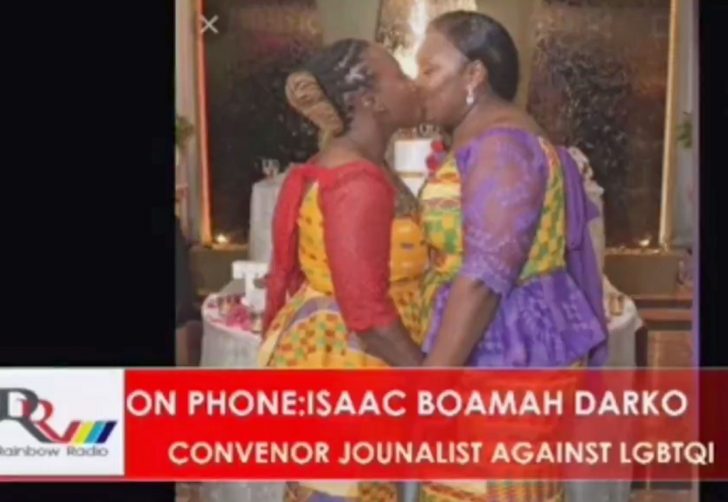
Ghana police have freed the people they arrested last weekend at a party that police believed was a “lesbian wedding”. Meanwhile, homophobic campaigns against Ghana’s LGBTQ citizens continue.The Ghana-based African Equality Centre (AEC) said that the latest report from Kwahu Obomeng and nearby Mpraeso is that 14 people were arrested in Kwahu Obomeng over the weekend rather than the 22 initially reported.
The AEC reported that the 14 arrestees were held by Mpraeso District Police until they paid for their release.
In a telephone interview with Rainbow Radio 87.5 FM, Isaac Boamah Darko, convenor of Journalists Against LGBTQI, said the 14 people’s release from police custody was like freeing an “armed robber”.
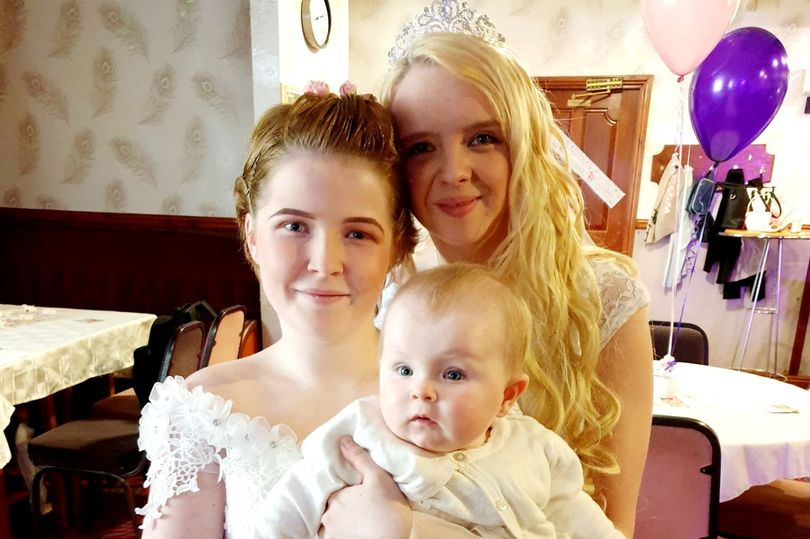
A young lesbian couple claim their baby is lucky to be alive after a rock was thrown through their window in the latest in a string of “targeted hate attacks”.
Eight-week-old Hope Devine escaped injury by centimetres after the missile bounced off the top of the swing chair she was sleeping in on Monday evening.
Parents Lucy, 21, and Leanne, 22, have been left “distraught” by the incident, which they say is the latest in a string of attacks directed at the couple in the last 18 months.
The couple say they have had homophobic notes shoved through their letterbox and have been attacked as they walked to the shop.
Police have mounted nightly patrols at the couple’s home since the rock attack, which is being treated as a hate crime.
Tua is a lesbian from Cameroon who finally received her leave to remain in the United Kingdom in 2019.
Tua talks to Sally Jackson about the violent lesbophobia she was subjected to in Cameroon, and how she was forced into a marriage by her mother. During her escape, she was exploited and trafficked to England where she faced the shameful policies of the UK’s Hostile Environment before finding support here. Her asylum claim was finally accepted in 2019 and she has received her leave to remain.
In April 2019, an International Protection Officer (IPO) recommended that the woman – who has not been named – be denied asylum, arguing that her claim lacked credibility.
The woman said she forced into two separate marriages as a child in Zimbabwe at the ages of nine and 13. She claimed she was forced to flee her home country after her family found out that she was a lesbian, leading to threats of violence.
The woman subsequently brought judicial review proceedings in an effort to have the 2019 IPO recommendation overturned – however, Justice Tara Burns denied her request on Friday (22 January), The Irish Times reports.
In her appeal, the woman argued that her sexuality was a “core element” of her asylum claim and that the IPO had failed to determine her sexuality when it recommended that she be denied asylum.
Before making a recommendation on her asylum claim, the IPO asked her questions about her sexuality and found that she was not aware of any LGBT+ support groups in either Ireland or Zimbabwe.
It took moving to the UK for me to realise that homosexuality isn’t and shouldn’t ever be a crime.
Still, because of Cameroon’s attitudes to LGBTQ+ people, I’m not able to go back to my home country – even when I lost my mother to cervical cancer in 2017. We were very close so it felt heart-wrenching not to be able to attend her funeral.
When I publicly came out as a lesbian via social media in 2017, a high profile Cameroonian producer threatened to rape the spirit of lesbianism out of me if I ever set foot in my home country again.
The whole ordeal was traumatic but he wasn’t the only one to send abuse or death threats. Comment after comment seemingly shared the same sentiment – that it’s un-African to be gay – but I couldn’t disagree more.
The Chechen Ministry of Internal Affairs did not initiate a case after the statement of Chechen woman Aminat Lorsanova about her torture because of her sexual orientation, reports Mediazona.
The lesbian from Chechnya complained to the Prosecutor General’s Office about the inaction of the TFR in January 2020. Aminat Lorsanova demanded to open a criminal case of torture, in which she accused her parents, a family friend and the staff of the borderline clinic. According to the victim, upon learning that she was lesbian, all these people tried to “drive the genie out of her.”
The victim said that in 2018 she was twice placed in psychiatric hospitals, where she was beaten and tortured, an acquaintance of her parents who visited her in the clinic also read verses from the Koran at the same time, and her father forcibly injected her with tranquilizers, sealed her mouth, put handcuffs on her and put her to sleep. In April 2019, the girl fled Russia; in January 2020 she filed a complaint with the police, and a month later she complained to the Prosecutor General’s Office about the inaction of the police.
(Translated)
МВД Чечни не стало возбуждать дело после заявления чеченки Аминат Лорсановой о пытках из-за её сексуальной ориентации, сообщает «Медиазона».
Лесбиянка из Чечни пожаловалась в Генпрокуратуру на бездействие СКРАминат Лорсанова в январе 2020 года потребовала возбудить уголовное дело о пытках, в которых обвинила своих родителей, знакомого семьи и персонал клиники пограничных состояний. По словам девушки, узнав о том, что она гомосексуальна, все эти люди пытались «изгнать из неё джинна».
Девушка рассказала, что в 2018 году её дважды помещали в психиатрические стационары, где её избивали и пытали, знакомый родителей, навестивший её в клинике, ещё и читал при этом стихи из Корана, а отец насильно колол ей транквилизаторы, заклеивал рот, надевал наручники и заставлял спать. В апреле 2019 года девушка сбежала из России, в январе 2020 года подала заявление в полицию, а спустя месяц пожаловалась в Генпрокуратуру на бездействие полицейских.
(Original)
Maria Walugembe from Kampala, the capital of Uganda, sought protection in Germany not from war, but from persecution, prison and murder. The now 44-year-old is a lesbian. In 2019, she fled her home country because in Uganda there is sometimes life imprisonment for homosexuality. Homosexuals are killed again and again. And the year Maria Walugembe leaves her country, even the government wants to make homosexuality officially a death penalty.
Maria has known since she was at school that she was a lesbian – and unfortunately her parents knew it too. “They forced me to get married to show that I was no longer a lesbian,” she says. “What could I have done? I was young and dependent on my parents. So they found me a husband and forcibly married me. That was hell for me!”
Neighbors throw stones at them At some point, Maria Walugembe meets a woman, falls secretly in love – and one evening, when her husband is out of the house, she feels safe. But her husband came back earlier than expected and caught Maria in bed with her friend. “My girlfriend was able to escape, but I couldn’t. I fought with my husband. And people from the neighborhood came up and pelted me with stones.” And then someone called the mayor, she says.
Maria is thrown into prison and has to stay there for two days without food. Then a police officer makes her an immoral offer, she says: “He came into my cell and said he wanted to help me. But then I told him that I had no money and nothing in return. He then said, you are one Woman. He was a man, if I really couldn’t think of anything. He wanted sex! “
Escape to Italy into prostitution Maria Walugembe gets involved. She sees it as the only chance to avoid a life sentence. At large again, she seeks refuge with her friend. But the friend is scared to death, organizes a flight to Europe for Italy and says she must leave the country immediately. Maria lands in Italy in May 2019 in the hope of a better life.
But penniless and on her own, she goes through hell once more: “My life, my health – everything got worse. I ate badly and was abused by men. My life was so terrible. I can’t talk about Italy … It was so terrible. “
Church asylum saves them from deportation Your luck in misfortune: a haulage driver destined for Germany. Maria Walugembe meets him somewhere on the streets of Italy. Although the driver really only wants sex, he offers Maria his help. It was not easy to accept this, she says: “He used me, but also saved me. Because if I hadn’t met him, I don’t know whether I would be alive now. And as a Christian, I still pray for me today him.”
(Translated)
Nicht vor Krieg, sondern vor Verfolgung, Gefängnis und Ermordung hat Maria Walugembe aus Kampala, der Hauptstadt Ugandas Schutz in Deutschland gesucht. Die heute 44-Jährige ist lesbisch. 2019 floh sie aus ihrem Heimatland, weil in Uganda mitunter lebenslange Freiheitsstrafe auf Homosexualität steht. Immer wieder werden Homosexuelle getötet. Und in dem Jahr, als Maria Walugembe ihr Land verlässt, will selbst die Regierung Homosexualität offiziell unter Todesstrafe stellen.
Maria weiß indessen schon seit ihrer Schulzeit, dass sie lesbisch ist – und zu ihrem Unglück wissen es auch ihre Eltern. “Sie haben mich gezwungen, zu heiraten, um zu zeigen, dass ich nicht länger lesbisch bin”, erzählt sie. “Was hätte ich tun sollen? Ich war jung und auf meine Eltern angewiesen. Sie haben mir also einen Mann gesucht und mich zwangsverheiratet. Das war die Hölle für mich!”
Nachbarn bewerfen sie mit Steinen Irgendwann lernt Maria Walugembe eine Frau kennen, verliebt sich heimlich – und wähnt sich eines Abends, als ihr Mann zunächst außer Haus ist, sicher. Doch ihr Mann kam früher als erwartet zurück und erwischt Maria mit ihrer Freundin im Bett. “Meine Freundin konnte entkommen, aber ich nicht. Ich habe ja mit meinem Mann gestritten. Und Leute aus der Nachbarschaft kamen dazu und haben mich mit Steinen beworfen.” Und dann habe jemand den Ortsvorsteher gerufen, sagt sie.
Maria wird ins Gefängnis geworfen und muss dort zwei Tage ohne Essen ausharren. Dann macht ihr ein Polizeibeamter ein unmoralisches Angebot, erzählt sie: “Er kam in meine Zelle und sagte, er wolle mir helfen. Ich hab ihm dann aber gesagt, dass ich kein Geld und nichts habe als Gegenleistung. Er sagte dann, Du bist eine Frau. Er sei ein Mann, ob mir denn da wirklich nichts einfiele. Er wollte Sex!”
Flucht nach Italien in die Prostitution Maria Walugembe lässt sich darauf ein. Sie sieht es als einzige Chance, einer lebenslangen Freiheitsstrafe zu entgehen. Wieder auf freiem Fuß, sucht sie Zuflucht bei ihrer Freundin. Doch die Freundin hat Todesangst, organisiert ihr einen Flug nach Europa mit Ziel Italien und sagt sie müsse das Land sofort verlassen. In Italien landet Maria im Mai 2019 in der Hoffnung auf ein besseres Leben.
Doch mittellos und auf sich alleine gestellt, geht sie einmal mehr durch die Hölle: “Mein Leben, meine Gesundheit – alles wurde schlimmer. Ich habe schlecht gegessen und wurde von Männern missbraucht. Mein Leben war so furchtbar. Ich kann nicht über Italien sprechen … Es war so furchtbar.”
Kirchenasyl rettet sie vor Abschiebung Ihr Glück im Unglück: ein Speditionsfahrer mit Ziel in Deutschland. Auf ihn trifft Maria Walugembe irgendwo auf Italiens Straßen. Obwohl der Fahrer eigentlich nur Sex will, bietet er Maria seine Hilfe an. Es sei nicht leicht gewesen, diese anzunehmen, sagt sie: “Er hat mich benutzt, aber auch gerettet. Denn wenn ich ihn nicht getroffen hätte, weiß ich nicht, ob ich jetzt noch am Leben wäre. Und als Christin bete ich noch heute für ihn.”
In an interview, Angela Ro Ro shared the experience of being one of the pioneers of the LGBTQ + movement in Brazil.
She said: “Coming out as a lesbian cost me the blindness in one eye and half in the other and a half of my hearing. I was beaten four times by the Military Police and once by the Civil Police. I suffered physical aggression in 1981, 1983, two episodes in 1984 and in 1990 by brass knuckles, iron bars and baton. It was during a dictatorship, but I think that has no direct connection.”
The singer also compared reactions from that time to the present day: “Don’t you see how many children are killed today by stray bullet in Rio? At the time, I also suffered many homophobic attacks in other ways and I was even raped. I am proud to have been a pioneer, I was the first artist to call myself a lesbian in Brazil.” (Translated)
Angela Ro Ro contou em entrevista como foi a experiencia de ser uma das pioneiras do movimento LGBTQ+ no Brasil.
Ela disse: “Me assumir lésbica me custou a cegueira de um olho e meio e metade da audição. Fui espancada quatro vezes pela Polícia Militar e uma pela Polícia Civil. Sofri agressões físicas em 1981, 1983, dois episódios em 1984 e em 1990 por soco inglês, barras de ferro e cacetete. Era ditadura, mas acho que não tem ligação direta”.
A cantora ainda comparou reações da época aos dias atuais: “Você não vê quantas crianças são mortas hoje em dia por bala perdida no Rio? Na época, também sofri muitos ataques homofóbicos de outras formas e cheguei a ser estuprada. Me orgulho de ter sido pioneira, fui a primeira artista a se dizer lésbica no Brasil”. (Original)












 Listening to Lesbians