A lesbian couple in Albania had an unofficial wedding in the capital city of Tirana to protest the country’s refusal to recognize marriages like theirs.
Alba Ahmetaj and Edlira Mara’s symbolic marriage ceremony took place on the roof of Tirana Mayor Erion Veliaj’s office on Sunday, May 19 2024, with the couple’s three-year-old twin daughters in attendance. “Our society is very patriarchal and homophobic,” Ahmetaj said before the ceremony, per Reuters. …
In February, Ahmetaj and Mara were subjected to death threats while having coffee in a café in Tirana, Albania’s capital and largest city. The couple reportedly received Facebook messages saying that they would be shot by a sniper “in the middle of the forehead” if they visited the establishment again. They also received a barrage of hateful comments after announcing their wedding ceremony on social media, with one commenter proclaiming, “You should burn in hell.”
The position of women and the LGBT community continues to worsen in many countries around the world. In many of these cases we are unable to find articles or analysis which refer specifically to the impact of the legal, political, economic and social changes on lesbians. The impact of these changes are often expected to be exacerbated for lesbians, who face the double impacts of sexism / misogyny and homophobia. Poverty, disability and racism exacerbate the impacts further still for many women. Despite this, in many traditional societies, women are restricted to the private family sphere with the violence, coercion and discrimination they face invisibilised and normalised by the imposition of expected social roles.
A Turin teacher at an art high school has been sentenced for the anti lesbian and sexual harassment of 8 female students between the ages of 17 and 18. The 55 year old teacher denied many of the comments made in 2021, defending his “educational method”.
The man has now been sentenced on appeal to a one-year prison sentence, with conditional suspension, having originally been sentenced to pay a fine of 400 euros for harassment.
Elena Kostuchenko is a Russian journalist in exile who has risked her life to give a voice to the silenced people in her country, especially the LGBTQI+ community. Her story is that of a woman who has faced threats, violence and censorship, but who has never stopped fighting. Her book El meu país estimat (My Beloved Country), recently published in Catalan, collects testimonies and chronicles published in the newspaper Nóvaya Gazeta , the last independent media outlet in Russia, which was closed down for its critical stance against Vladimir Putin’s regime.
Being a lesbian in Russia is not only a personal challenge, but a matter of survival, as she explains in an interview with El Diario. “In my country, I can’t be at peace as a woman, let alone as a lesbian,” says Kostuchenko. Homophobia is not just a social prejudice, but a state policy. Laws against “LGBTQ+ propaganda” prevent any kind of visibility, and violence against the community is common. “At the first Pride march in Moscow I participated in, I ended up in the hospital after being attacked by protesters,” she recalls.
Original:
Ielena Kostyutxenko (Iaroslavl, 1987) es una periodista rusa en el exilio que ha arriesgado su vida por dar voz a las personas silenciadas en su país, especialmente a la comunidad LGTBIQ+. Su historia es la de una mujer que ha enfrentado amenazas, violencia y censura, pero que nunca ha dejado de luchar. Su libro El meu país estimat (Mi país querido), recientemente publicado en catalán, recoge testimonios y crónicas publicadas en el diario Nóvaya Gazeta, el último medio independiente de Rusia, que fue clausurado por su postura crítica contra el régimen de Vladímir Putin.
Ser lesbiana en Rusia no solo es un desafío personal, sino una cuestión de supervivencia, y así lo cuenta en una entrevista a El Diario. “En mi país, no puedo estar tranquila siendo mujer, y mucho menos siendo lesbiana”, afirma Kostyutxenko. La homofobia no es solo un prejuicio social, sino una política de Estado. Las leyes contra la “propaganda LGTBIQ+” impiden cualquier tipo de visibilidad, y la violencia contra la comunidad es frecuente. “En la primera marcha del Orgullo en Moscú en la que participé, terminé en el hospital tras ser agredida por manifestantes contrarios”, recuerda.
The courts rejected the release of Orlando Alcides Lutz Fogar, who was accused of setting fire to a house in Cañuelas, a case that gained notoriety for apparently being an anti lesbian hate crime.
The defense team cting for the 61-year-old who turned himself in after several weeks as a fugtive requested “extraordinary release,” a measure applied in specific cases, such as those involving disabilities or those over 75 years of age, among others. Judge Martín Miguel Rizzo rejected the request because none of the specific conditions for exceptional release apply in Lutz Fogar’s case.
A police officer has been sacked after he made comments on the sex lives of junior lesbian colleagues.
PC Tom Hamer asked questions that were deemed to be “inappropriate, unacceptable and discriminatory” by Andy Prophet, the chief constable at Hertfordshire Police.
A misconduct hearing was told PC Hamer, who was 24 at the time of the incidents, made the comments despite being told several times prior “to desist”.
The hearing on Wednesday concluded that PC Hamer’s words on four separate occasions, between December 2023 and February 2024, amounted to gross misconduct and he was dismissed without notice.
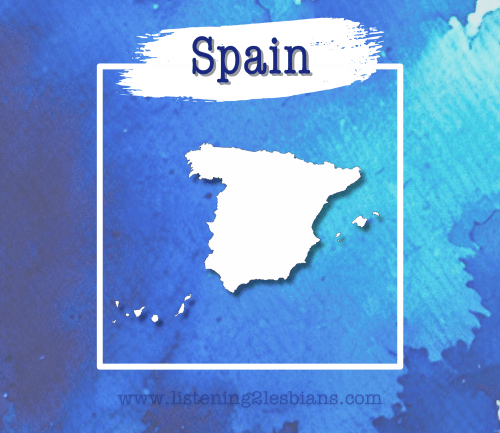
The application for political asylum for lesbians in Spain is based on the assumption of non-discrimination based on sexual orientation, as protected by the Spanish Constitution. If this is the case for someone you know living abroad who is at risk, they may be eligible for this option thanks to Article 7 of Law 3/2009 , of October 30, regulating the right to asylum.
The steps to follow are as follows: Entry into Spain – Although it would be technically possible to do so from a Spanish consulate or embassy, asylum seekers typically do so by entering the country.
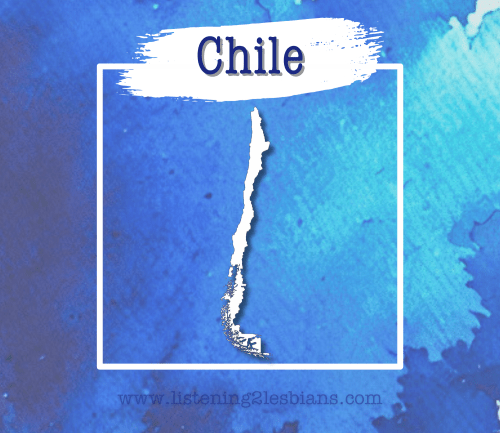
In a milestone event for lesbian women, lesbian-feminist groups yesterday installed a plaque commemorating Mónica Briones and all the victims of lesbian hatred in downtown Santiago. The space was set up by lesbian-feminist collectives in Merced with Irene Morales, the same place where Mónica was murdered in 1984. Her case is the first documented lesbian-hate crime in Chile, following years of investigation by journalist and founder of Rompiendo El Silencio, Érika Montecinos. In a milestone event for lesbian women, lesbian-feminist groups yesterday installed a plaque commemorating Mónica Briones and all the victims of lesbian hatred in downtown Santiago.
The plaque was installed in Merced and Irene Morales (the same place where Monica was murdered on July 9, 1984), following years of collective efforts by the groups Rompiendo El Silencio, Red Lesbofeminista, La Crisis, Burdas, and the Frente Musical Combatibe, among others.
“Commemorative space: to all the women victims of lesbian hatred. Mónica Briones Puccio (July 7, 1950–July 9, 1984) was murdered on this corner. She was an out lesbian, Chilean painter, sculptor, and artist. The brutal, unjust crime against her was used as an example to promote July 9 as Lesbian Visibility Day in Chile,” the plaque reads.
A theater in Iran, two actresses, and the daring idea of portraying a lesbian love story: Here in the land of the mullahs, everyone knows what they’re risking. But they can’t do anything else.
A quick cup of tea before rehearsing the play in which two women will become intimate: two wrestlers training. Two young women with loose hair, trying out what it’s like to kiss on stage. It’s eleven o’clock in the morning on the second floor of an apartment building in Tehran, the capital of the Islamic Republic.
That much is clear. But not much more, for example, whether what they’re planning is normal, risky, or completely crazy. And perhaps the confusion begins with the calendar: in most of the world, it’s February 2025; in Iran, where they use the Persian calendar, they write the year 1403. But if you ask the director or the two actresses, a new era began in Iran in the autumn of two years ago. According to this calculation, they’re currently writing the year three after Mahsa.
It’s the third year since the death of Jina Mahsa Amini, the young woman who died after being arrested by the morality police for allegedly improperly wearing the hijab, the headscarf. The largest and longest protests the Iranian regime has ever seen followed. But the regime remains, and so do its prison cells.
Emma MacLean and girlfriend Tori were walking home from Emma’s birthday celebration when they passed the group of 10 men. One of them made a sexually degrading comment towards Emma so Tori stood up for her saying ‘hey, that’s my girlfriend.’
He continued making offensive and homophobic remarks at the couple before they were set upon by the group. Emma told CTV News: ‘I see Tori being pushed on the stairs right in front of the BMO Centre, and they are cement stairs, and she’s on her back – that’s when all the men started punching and kicking her.
OLYMPIC icon Cindy Ngamba was once threatened with deportation to Cameroon, where gay women face five years in prison. Now the 25-year-old has a Paris 2024 bronze medal — the Refugee Team’s first ever — and makes her pro debut at the Royal Albert Hall on March 7. …
But because she lacked the correct paperwork, she has never had a British passport. Even when Team GB were desperate for her to represent them, red tape blocked it. The lowest point came when Ngamba and her brother went for their weekly sign-in at a Manchester immigration office but were split up, handcuffed and almost returned to the country they left years before.
In Krasnodar, last weekend, security forces raided a nightclub on Suvorov Street in Krasnodar. We are talking about the “Central Base”, which is known among city residents as a local gay club*. There were about 200 people there.
The raid was carried out by employees of the Center for Combating Extremism (CPE), the Drug Control Department (DCD), the Department for the Execution of Administrative Legislation (DEL) of the regional Ministry of Internal Affairs, and security forces of the Russian National Guard.
Two Krasnodar women, aged 28 and 40, were detained at the club. The press service of the regional Ministry of Internal Affairs called the women “supporters of a public movement banned and recognized as extremist in the territory of the Russian Federation.” Protocols were drawn up against them under Part 1 of Article 6.21 of the Code of Administrative Offenses of the Russian Federation (Propaganda of non-traditional sexual relations and (or) preferences, gender reassignment).
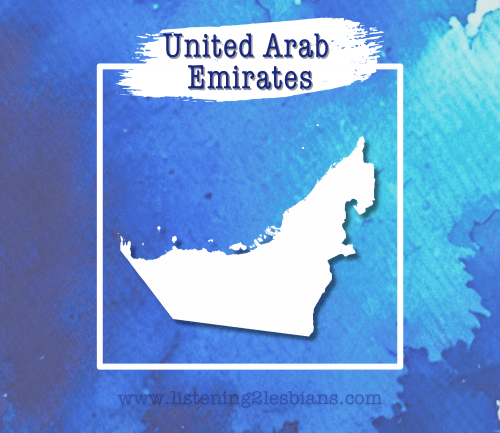
MELBOURNE, Feb 14 (Reuters) – Twice world champion Tyler Wright will compete in the Abu Dhabi surfing event after seeking assurances from organisers that she will be in a “safe environment” as a gay athlete.
Homosexuality is illegal in the United Arab Emirates and sexual activity between people of the same sex is punishable by imprisonment.
“I’ve been working with the appropriate teams in the UAE as well as the WSL (World Surf League) and am assured that I will be competing in a welcoming and safe environment,” Australian Wright said on Instagram.
Diana never wanted to leave her homeland. The 32-year-old comes from Juba, the capital of South Sudan. She worked as a police officer, was a football coach in her free time and went to church. Many people knew and respected her. Until her relationship with another woman came to light. There were several rumors that Diana might be a lesbian. Homosexual acts are forbidden in South Sudan and can be punished with ten years in prison. To be on the safe side, Diana does not want to see her last name in the newspaper.
Most of the time the rumors could be dispelled, Diana always denied her queerness and her partner. “I said ‘Nani, Nani? I don’t know any Nani.’ But that was my friend’s name.” This is how she tells SIEGESSÄULE about the conversation with a colleague and to some extent her status as a police officer protected her from criminal prosecution. A photo as evidence changed the situation: the state security service wanted to take Diana to the “Blue House.” At least that was the warning from a friend who is active in a women’s rights organization.
“Whoever goes in there will never come out alive.”
According to a report by Amnesty International, the “Blue House” is a detention facility run by the National Security Service. “Anyone who gets in there will never get out alive,” explains Diana. “Then you’re a political prisoner.” Before things could get that far, her friend organized her temporary departure to neighboring Uganda. And then to Germany last July. “At first I refused. I didn’t want to go anywhere. I didn’t even know where Germany was.“ Diana also paid the school fees for some of her nephews and nieces and looked after the family. Eventually she was persuaded to flee – she couldn’t help her family even if she was dead.
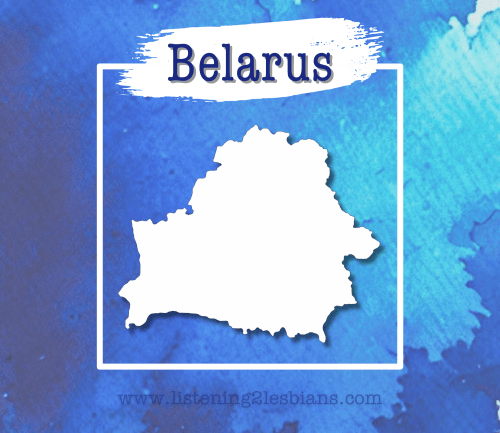
For two decades, Katsiaryna “Katya” Snytsina wore the national colors of Belarus on the basketball court, including at the Beijing 2008 and Rio 2016 Summer Olympics.
She deserves to be feted back home as one of the Eastern European country’s greatest-ever athletes.
If you live in Belarus and follow @snytsina on Instagram, you’re likely to be detained for 15 days if the police stop you and decide to go through your phone.
Adele*, 37, was in a relationship with Diane*, 32, who was living with her family. The couple had been in love for several months without any obstacles….
After Adele and Diane moved in together, a family member found a Valentine’s Day card and realised they were a couple. As soon as Diane’s family was aware of the situation, Adele started receiving threats. Diane was ordered home and her brothers started searching for Adele who is now in hiding, following the threats.
Deputy Daiana Santos (PCdoB-RS) cites data from the Second “National Mapping of Lesbian Experiences in Brazil”, carried out by the Brazilian Lesbian League and the Lesbian Feminist Association of Brazil, according to which 25% of lesbian women suffered discrimination in gynecological care and 73% reported that they were afraid, apprehensive or embarrassed to talk about their sexual orientation in health care.
“The lack of specific training on the health needs of this population, combined with the persistence of prejudices, negatively impacts the quality of care,” points out the parliamentarian.
“The fact that many of these women avoid health care due to fear of discrimination is a serious public health problem, which can worsen the situation of preventable or treatable diseases,” she adds.
According to the survey, 26% of lesbian women said they did not have regular gynecological exams, 13% never had them, and 12% had them every two years. “As if that were not enough, the approach to health care aimed at heterosexual women often ignores the specificities of lesbian and bisexual women,” the deputy also states.
Original: Autora do projeto, a deputada Daiana Santos (PCdoB-RS) cita dados do Segundo o “LesboCenso Nacional: Mapeamento de Vivências Lésbicas no Brasil”, realizado pela Liga Brasileira de Lésbicas e pela Associação Lésbica Feminista de Brasília, segundo os quais 25% das mulheres lésbicas sofreram discriminação em atendimento ginecológico e 73% relataram que possuíam medo, receio ou constrangimento de falar sobre sua orientação sexual em atendimentos à saúde.
“A ausência de formação específica sobre as necessidades de saúde desta população, combinada com a persistência de preconceitos, impacta negativamente a qualidade do atendimento”, aponta a parlamentar.
“O fato de muitas dessas mulheres evitarem o atendimento de saúde devido ao medo de discriminação é um grave problema de saúde pública, que pode agravar o quadro de doenças evitáveis ou tratáveis”, acrescenta.
Segundo o mapeamento, 26% das mulheres lésbicas afirmaram que realizavam exames ginecológicos sem regularidade, 13% nunca os realizaram e 12% os realizavam de dois em dois anos. “Se isso não bastasse, a abordagem dos cuidados de saúde destinados a mulheres heterossexuais frequentemente ignora as especificidades das mulheres lésbicas e bissexuais”, afirma ainda a deputada.
Canada said it granted refugee status to two Japanese women last September due to widespread discrimination they faced in Japan as lesbians and ‘members of the weaker sex’.
Ottawa also cited the lack of legal marriage in Japan for same-sex couples as a reason to certify the couple as refugees, noting the couple was denied the benefits given under the Japanese system to those in opposite-sex marriages.
Canadian immigration authorities said the fear of facing persecution in Japan held by the two women was grounded on a sufficient basis.
Afghanistan is a country where homosexuality is illegal and punishable by death under Sharia law. This law has been enforced in the past via the former Republic government of Afghanistan penal code[1], and there are reports of LBQ individuals being targeted and subjected to violence and discrimination. In addition, women in Afghanistan face significant gender-based violence and discrimination and at times are subject to the death sentence. In fact, the situation has exacerbated for LBQ individuals.
The Taliban’s takeover of the country has further worsened the situation for LBQ individuals in Afghanistan. The interpretation of the Sharia law made by the Taliban is particularly harsh, and they have a history of targeting LBQ individuals. The Taliban’s treatment of LBQ individuals has been documented by human rights organizations, with reports of LBQ individuals being executed or subjected to brutal punishments, including stoning and whipping.
Fatima, a 26-year-old lesbian, has an uncle who is a prominent religious leader allied with the Taliban. From the moment the Taliban has returned to power, “the world has become a dark abyss for me that is trying to swallow my dreams, my happiness, my peace, my achievements, my education, my job,” says Fatima. At the time she was working in a local university, but was forced out of her job and replaced by a man who is a Taliban loyalist.
15 April 2024 A screening of the queer film ‘Love Lies Bleeding’ at the Brussels International Fantastic Film Festival (BIFFF) on Saturday was stopped after lesbophobic remarks came from several members of the audience, which resulted in a brawl.
The BIFFF takes place from 9 to 21 April annually at Palais 10 near the Atomium. It advertises itself as a festival open to all kinds of genres, from fantasy to horror and black comedy. On Saturday evening, a screening of the film ‘Love Lies Bleeding’ was on the agenda, a romantic thriller film directed by Rose Glass and starring Kristen Stewart. However, several members of the audience soon started to shout crude comments about lesbians. One person who was attending the screening said people “even applauded a rape scene.”























 Listening to Lesbians