Courtesy of NBC News and ONE Archive at USC Libraries
In 1947, Edythe Eyde was a secretary working at RKO Radio Pictures in Los Angeles. A speedy typist who often completed work ahead of schedule, her boss told her: “Well, I don’t care what you do if you get through with your work, but … don’t sit and read a magazine or knit. I want you to look busy.”
The literary-minded lesbian saw an opportunity. Gay culture was largely underground, and it was difficult for “the third sex” to meet like-minded others. Using a Royal manual typewriter and carbon paper, making six copies at a time, the 25-year-old launched Vice Versa — “a magazine dedicated, in all seriousness, to those of us who will never quite be able to adapt ourselves to the iron-bound rules of Convention.”
“During those days I didn’t really know many girls,” she told the lesbian magazine Visibilities in a 1990 interview. “But I thought, well, I’ll just keep turning out these magazines and maybe I’ll meet some!”
Sports tournaments were among the few spaces where lesbians could be visibly out. That visibility didn’t come without a fight; homophobia was ever-present. But still, these events were some of the only non-bar spaces where lesbian cruising could happen. The Ladies Professional Golf Association (LPGA), for example, was once mockingly dubbed a haven for “dykes with spikes” or “androgynous feminists with lob wedges and attitudes.” Then there’s Dana from The L Word—our fictional pro tennis lesbian—who famously landed a Subaru sponsorship, a wink to real-world queer marketing.
Meanwhile, the professional tennis circuit was flooded with lesbian gossip. Conchita Martínez, for instance, never officially came out, but it was widely known she dated fellow tennis legend Gigi Fernández in the ’90s. Their relationship may have cost Fernández her spot on the 1996 U.S. Federation Cup team, which was set to face Spain. “If it was France and not Spain that we were playing, I’d be on the team,” Fernández said. “I’m half of the best doubles team of the ’90s, how can I not be a team player?” Team captain Billie Jean King reportedly feared Fernández might prioritize her “friendship” with Martínez over her loyalty to the U.S.While we want to believe that the days of hiding queer relationships are behind us, queerphobia in tennis—and across sports—remains. Today, few players are openly out. Those who are, often face backlash. And many still choose to remain closeted. As recently as a few years ago, Ukrainian player Sergiy Stakhovsky notoriously said, “On the WTA tour, almost every other player is a lesbian. So I for sure won’t send my daughter to play tennis.” His comment was widely condemned, but it reflected a still-hostile environment for queer athletes.
To that kind of homophobia, we say: Dykes in spikes? Half the women are lesbians? Sounds like our kind of place.
And that’s exactly the spirit behind Lesbian Garros.
A lesbian insurance agent is planning to set up the first co-living space for elderly LGBTQ people in Hong Kong, with service options including financial planning to help provide legally recognised asset arrangements for same-sex couples.
Jeanne Cheung Jing-lam, 32, aims to raise HK$20 million (US$2.6 million) through crowdfunding to convert the disused Jordan Square shopping centre into a five-storey co-living space, which would include communal areas such as a bistro, a gym, a garden, a lounge and activity spaces for hosting talks and screenings.
On Thursday, an FSB officer told us we were going to be freed as part of a prisoner swap — the miracle we had been waiting and hoping for. At first, I didn’t believe it — for 2 ½ years, I’d been lied to every single day. I thought that I would be serving the rest of my sentence — seven years. Russian political prisoners don’t have the privilege of early release.
“The British Broadcasting Corporation (BBC) has named Ugandan LGBTQ+ rights activist Kasha Jacqueline Nabagesera to its list of this year’s “100 inspiring and influential women from around the world”.”
“The BBC said about Nabagesera: “Homosexual acts are illegal in Uganda, punishable by prison sentences – and LGBTQ+ advocate Kasha Nabagesera is fighting to change these repressive laws. As an openly gay woman, she has made a profound impact campaigning against LGBTQ+ stigma across Africa. Nabagesera has successfully sued newspapers and the Ugandan government for anti-LGBTQ+ rhetoric: she has twice challenged anti-homosexuality laws in Ugandan courts and is currently challenging a 2023 act.”
It has also been reported that “for the first time since Uganda’s Anti-Homosexuality Act (AHA) 2023 came into force, cases of homophobia-driven arrests have topped the list of human rights violations against known or suspected LGBTQI+ persons, overtaking violence and evictions, according to a report just published by the Human Rights Awareness and Promotion Forum (HRAPF).”
Akissi is a lesbian from Ivory Coast in West Africa, living in Abidjan. She has been diagnosed with rectal cancer and has been able to undergo chemotherapy and one surgery, but she needs a second surgery to fully recover. Medical treatment in Ivory Coast is expensive. Akissi’s surgery costs 3 million CFA francs, or around CA$7,000 (around AU$7630, or 4,690€). Akissi has managed to raise part of the funds, but is still CA$5,000 short of the full cost of the operation. Because she is a lesbian, she is estranged from her family and does not have any support to help raise the additional funds.
Akissi est une lesbienne originaire de Côte d’Ivoire, en Afrique de l’Ouest, qui vit à Abidjan. Elle a été diagnostiquée avec un cancer du rectum et elle a pu suivre une chimiothérapie et subir une intervention chirurgicale, mais elle a besoin d’une seconde opération pour être complètement rétablie. Les traitements médicaux en Côte d’Ivoire sont coûteux. L’opération d’Akissi coûte 3 millions de francs CFA, soit environ CA$7000 dollars canadiens (environ AU$7630 dollars australiens, ou 4 690€). Akissi a réussi à réunir une partie des fonds, mais il lui manque l’équivalent de CA$5000 dollars canadiens pour pouvoir payer le prix de l’opération. Parce qu’elle est lesbienne, elle n’a plus de contact avec sa famille et elle n’a pas de soutien pour réunir le reste de l’argent.
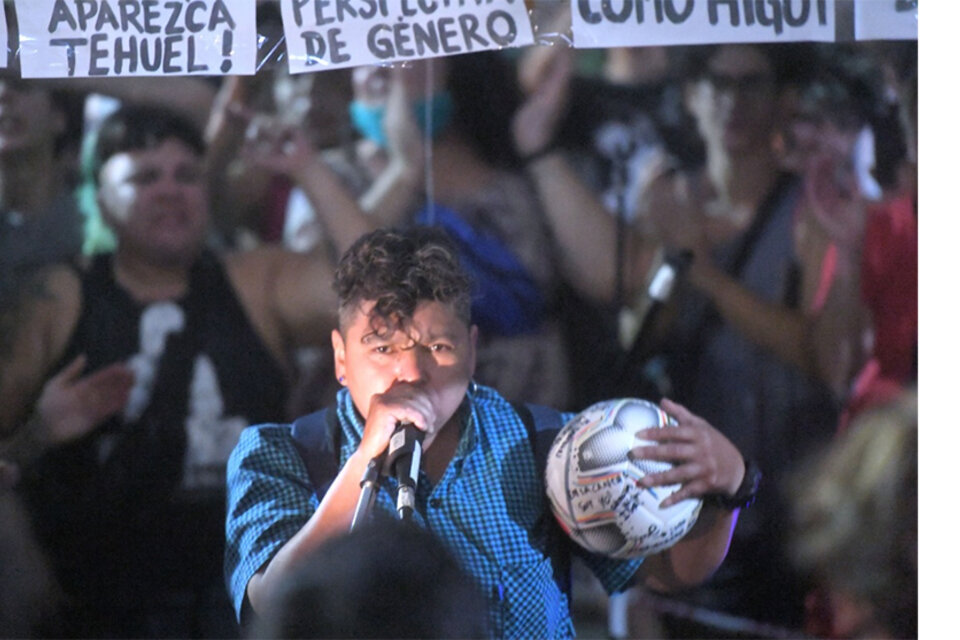
Higui speaks after being acquitted of manslaughter, having defended herself during a brutal and traumatic attack and attempted corrective rape.
On October 16, 2016, Argentinian woman Eva Analía De Jesús, better known as Higui, was walking through the Buenos Aires town of Bella Vista when a group of men attacked her because of her sexual orientation. Higui — who was given that nickname because she was a soccer player and had curls like the Colombian René Higuita — told the police and later the judges that her attackers beat her and tried to rape her. “I’m going to make you feel like a woman…a lesbian,” Cristian Rubén Espósito told her, according to his account. She took out a knife and plunged it into his chest. She fainted and when she regained consciousness she was arrested. Despite the fact that she reported an attempted corrective gang rape and that she was found unconscious by police officers, with torn clothing and numerous injuries from beating, her allegations were never investigated. She was charged with simple murder and spent almost eight months in jail. This Thursday she was aquitted. (Translated)
El 16 de octubre de 2016, la argentina Eva Analía De Jesús, más conocida como Higui, caminaba por la localidad bonaerense de Bella Vista cuando un grupo de hombres la atacó debido a su orientación sexual. Higui —a quien le pusieron ese apodo por ser futbolista y tener rulos como el colombiano René Higuita— contó ante la policía y después ante los jueces que sus agresores la golpearon e intentaron violarla. “Te voy a hacer sentir mujer, forra, lesbiana”, le dijo Cristian Rubén Espósito, según su relato. Ella sacó una navaja y se la clavó en el pecho. Se desvaneció y cuando recuperó la conciencia estaba detenida. A pesar de que ella denunció un intento de violación grupal correctiva y que fue encontrada inconsciente por los policías, con la ropa rota y numerosos golpes, sus acusaciones nunca se investigaron. Fue acusada de homicidio simple y pasó casi ocho meses encarcelada, pero este jueves un tribunal dictó su absolución. (Original)
Back in May, when the streaming platform Twitch announced the release of more than 350 new “identity tags” that could be used to sort streams into distinctive categories, Jess Bolden was excited.
The 25-year-old FACEIT Games Esports analyst, who lives between France and Italy with her female partner, streams the game Rainbow Six Siege, a largely male-dominated pursuit. Bolden was once Samsung team head coach for the game, which she streams under the name JessGOAT.
She figured she could use the new “lesbian” tag to show other lesbian gamers that her stream was a safe space for them. But, Bolden says, she felt conflicted. “I would look at the tag for that extra second, to question myself, and I’m usually confident in everything that I do,” Bolden says. “So there’s obviously a problem.”
Bolden’s hesitancy was justifiable. Twitch has been widely criticized for an ongoing scandal involving “hate raids” aimed mostly at its BIPOC and LGBTQIA+ users. These attacks are carried out by bots programmed to spam streamers’ chats with offensive messages. The conditions became so bad that Twitch users started a campaign — #TwitchDoBetter — to push for change, and at one point arranged a digital “protest” where streamers boycotted the platform in solidarity with hate raid victims.
In response, Twitch last month filed a lawsuit against two users allegedly behind many hate raids and, more recently, introduced chat verification.
While hate against streamers is common, lesbians feel they are the subject of both sexism and a specific kind of sexualization. “We get multiple DMs, like ‘I could turn you straight’ or ‘You haven’t found the right guy,’” says Baeu, an 18-year-old lesbian streamer from Florida who broadcasts to followers under the name Spoink. Baeu is a member of Lilac Lesbians, a Minecraft Championship team hoping to increase lesbian representation in gaming. (Input is withholding the last names of most of the streamers in this piece out of concern for their safety.)
“Even when I was underage, they’d still message me inappropriate stuff,” Baeu adds. “Twitch’s solution was pretty much: ‘Oh, well you have your messages open.’” She adds that multiple reports she’s submitted to the company about harassment have not resulted in any action against offending users.
The “lesbian” tag has only increased harassment, according to Bolden. “‘I hate gays’ is probably the most common [comment],” she says. “Or people complaining that I’m a lesbian.” All of the streamers interviewed agreed that they had seen abuse aimed specifically at lesbians, ranging from statements like “of course you’re a lesbian — you’re fat” to assertions that the lesbian streamers were “going to hell” because of their sexuality.
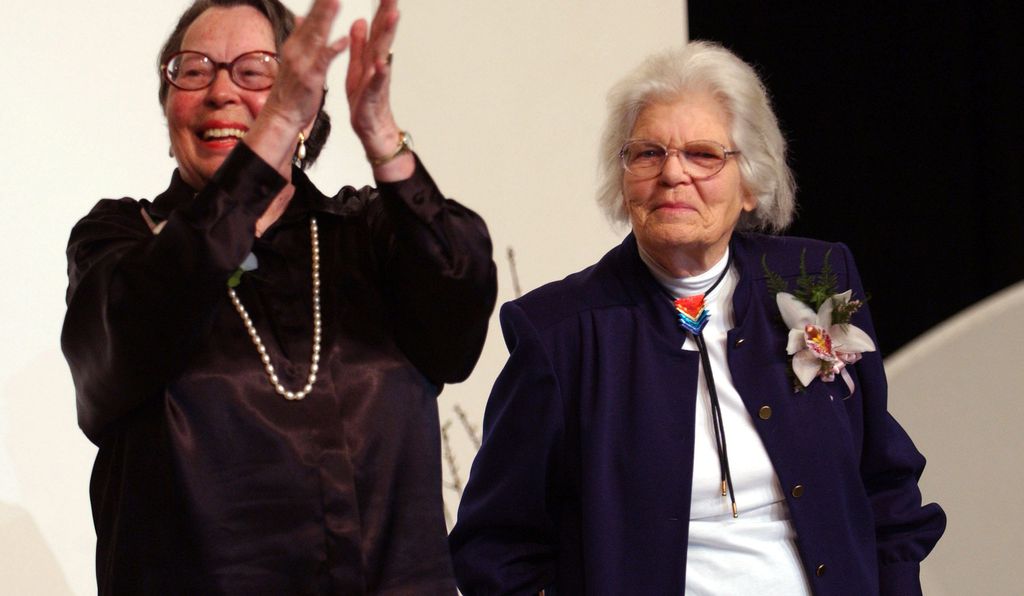
In 2008, after 55 years together, Del Martin, age 87, and Phyllis Lyon, age 84, were finally wed in San Francisco, but it was for the second time. Four years earlier, before same-sex marriage was legalized in the state of California, during a large ceremony honoring their long-standing contributions to LGBTQ activism, they were the first of 90 gay couples to be married illegally by the city’s then-mayor Gavin Newsom.
When Martin and Phyllis made their initial vows as San Francisco’s first same-sex couple, the ceremony was conducted so that their union could potentially be included in a lawsuit to champion marriage equality in the United States. The director of the National Center for Lesbian Rights, Kate Kendell, invited them with this promise: “This will hopefully be the last thing the movement will ever ask you to do, but do you wanna get married?”
As lesbian history was unfolding in the 1950s, it was Del and Phyllis who gathered in the home of their friend Rose Bamberger and her partner Rosemary Sliepen and founded the Daughters of Bilitis (DOB), the first lesbian organization in the country. Martin and Lyon would soon become co-editors of the Ladder, DOB’s publication, and grow the readership even amid an era of pervasive homophobia. The pair was also the first lesbian couple to join the National Organization for Women, as feminist causes also spurred their organizing work.
Over the next five decades, Martin and Lyon never stopped organizing, and gradually, thanks in no small part to their efforts, LGBTQ visibility shifted from secrecy to “out and proud” activism.
I will never forget watching Martina Navratilova play at Wimbledon the year after she came out as a lesbian. It was the 1982 tournament and the backlash against her had been brutal.
Very deeply courageous and principled, Martina once estimated that she lost around US$10 million in endorsement deals as corporate executives rushed to distance themselves from her at a time when anti-gay bigotry was sky high within the context of the AIDS crisis.
Martina was the very first lesbian role model of my generation. I was 20 years old during that tournament, and I heard from lesbians of all ages about the pride they felt at being able to tell those friends and family members that were not comfortable about lesbianism that Martina was one of them. The only other lesbians I had seen on TV were the characters in The Killing of Sister George, portrayed as twisted and damaged individuals, so having a sports superstar on our team was amazing.
Clearly not everyone felt the same. The Australian retired tennis player Margaret Court, who had won at Wimbledon three times, said in 1990 that although Navratilova is a “great player” she would like to see somebody win, “to whom the younger players can look up to”. Court, a born again Christian, said that as far as she was concerned, “it is very sad for children to be exposed to homosexuality.”
The name of Javiera Mena is a beacon for the Latin American LGBTQ community, even more so among in the musical community.
Since the beginning, Mena has sung about lesbian love, while fighting to defeat the stigma around that. Her battle for the visibility of the LGBTQ community, of which she is a part, has led her to be considered an icon.
The Chilean singer-songwriter presented her Extended Play “Entusiasmo” a month ago, hinting at the album she plans to release in 2022.
The production includes the singles “Diva” with Chico Blanco, a song to pay tribute to the LGBTQ community, and “Dos”, a ballad that tells the story of a woman in love with two other women.
Towards the normalization of lesbian love in music
But is it easy to write and sing love songs between women?
“There are few songs which are a lesbian woman singing to another woman. There are very few of these in the mainstream although there must be more now. I’m sure I am missing some and that there will be more and more.” Mena told Zona Pop CNN.
“In pop music we always have had gay men. We have great gay performers – Freddie Mercury, George Michael, Elton John. Even in Latin America, we had Juan Gabriel – although what was obvious didn’t need to be asked about [his iconic response to being asked if he was gay]. But we don’t have many references for lesbian women in Latin America, or in the rest of the world,” adds the singer-songwriter. (Translated)
El nombre de Javiera Mena es un referente para la comunidad LGBTQ en Latinoamérica. Más aún la musical.
Desde sus inicios, Mena le ha cantado al amor lésbico, al mismo tiempo que ha luchado para derrotar el estigma alrededor de esa palabra. Su batalla por la visibilización de la comunidad LGBTQ, de la cual es parte, la ha llevado a ser considerada un ícono.
La cantautora chilena presentó hace un mes su Extended Play “Entusiasmo”, un abrebocas del que será el disco que prevé lanzar en 2022.
De la producción se desprenden los sencillos “Diva” junto a Chico Blanco, un tema para rendirle tributo a la comunidad LGBTQ, y “Dos”, una balada que cuenta la historia de una mujer enamorada de otras dos mujeres.
Hacia la normalización del amor lésbico en la música
Pero, ¿es fácil escribir y cantar canciones al amor entre mujeres?
“Hay pocas canciones de una mujer lesbiana hablándole a otra mujer. Hay muy pocas igual en el mainstream, o ahora deben haber más, seguramente yo no me estoy enterando y cada vez habrá más”, dijo Mena a Zona Pop CNN.
“En la música pop siempre existió el hombre gay. Tenemos grandes referentes, Freddie Mercury, George Michael, Elton John, incluso en Latinoamérica, Juan Gabriel, que aunque lo que se ve no se pregunta, ¡lo que se ve no se pregunta! Pero de mujeres lesbianas no tenemos muchos referentes en Latinoamérica y en el mundo tampoco”, agrega la cantautora.
After a Russian grocery chain apologized for featuring gay parents in an ad, two lesbian parents told Meduza what it’s like to live in a country where their very portrayal qualifies as offensive.
In late June, the Russian grocery store chain VkusVill put out an advertisement featuring a lesbian couple as part of its “Recipes for Family Happiness” campaign. The ad set off an avalanche of homophobic comments and threats against the company, and VkusVill soon announced it would delete the ad, calling it “a mistake that occurred as a result of some individual employees’ unprofessionalism.” This sparked another wave of criticism on social media, as people accused the chain of cowardice and hypocrisy. Throughout the debate, however, there’s been almost no mention of the difficulties same-sex couples in Russia actually face. To learn more about what life is like for same-sex parented families in Russia, Meduza spoke to Yana and Yaroslava, two women in a loving relationship who are now raising a child together.
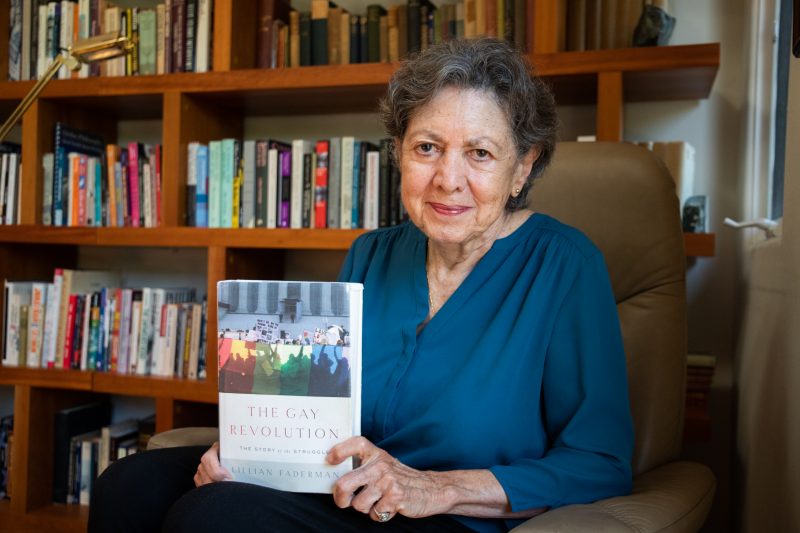
July 16, 2021: Lillian Faderman is a mother and grandmother, but these aren’t the only titles that make her proud: The La Jolla resident is known, depending on who you talk to, as the “mother of lesbian history” or the “foremother of gay and lesbian studies.”
Over the past four decades, Faderman’s books have revealed the hidden history of female same-sex romance and uncovered how American lesbians pioneered social movements that transformed our society. She’s also written landmark books about gay rights, pioneering politician Harvey Milk and more. Three of her works have been named Notable Books by The New York Times, a remarkable accomplishment for any author.
Faderman, who turns 81 on Saturday at the tail end of San Diego’s Pride Week, isn’t done. She recently curated an exhibit about local LGBTQ+ history at the San Diego History Center, and she’s now finishing her work on an upcoming book. In an interview, she talked about her awakening as a Southern California teenager, the influential roles of lesbians in America’s past and San Diego’s surprising history as a vanguard of LGBT activism.
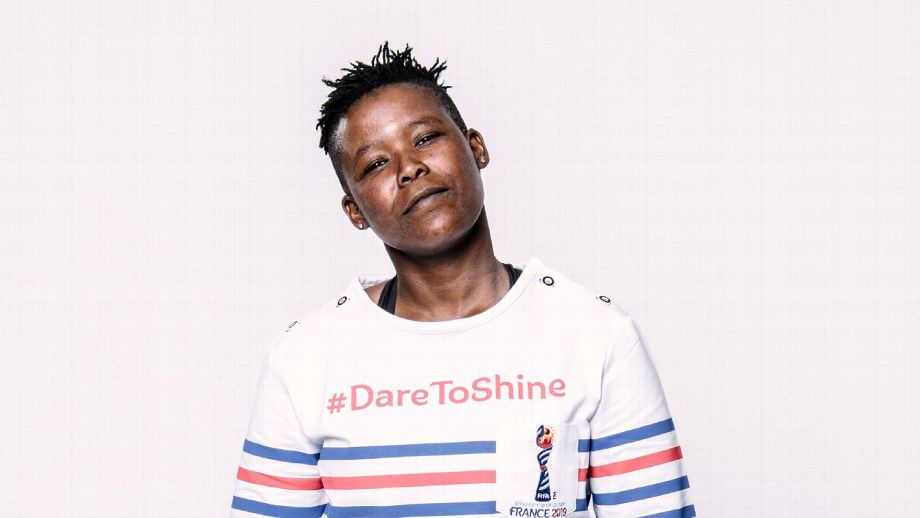
Former South Africa striker Portia Modise doesn’t care if the football community loves her. She doesn’t care if you like her outspoken manner, or the way she dresses, or that she loves women.
She’s the only African footballer to score 100 international goals, and represented her country for 15 years from the age of 16. But if you don’t want to give her respect for that, or her countless achievements on the field, she’s not too fussed about that either.
One of the first openly gay [sic] players in the global game, Modise says she only cares about furthering women’s football in South Africa, protecting female players from harassment, and being a voice for the LGBTQ+ community in her country.
Today, 21 years after her debut in 2000, the out footballers in Africa can be counted on one hand, but interestingly include her captaincy successor for Banyana Banyana, Janine van Wyk.
Despite hard-earned legal freedoms and constitutional rights won since apartheid [same-sex marriage has been legal in South Africa since 2006], much of the LGBTQ+ community in South Africa lives in perpetual fear of violence.
Murder and ‘corrective rape’, during which women are violated to ‘fix’ their queerness [sic], are still an epidemic for Black women in particular. There have been over 20 recorded LGBTQ+ hate crime murders locally since February 2021.
For Modise, the especially brutal rape and murder of national teammate and fellow activist Eudy Simelane in 2008, who was stabbed 25 times, further spurred her on in her fight for fair treatment, and was a factor in her exit from the team for four years.
Catholic nun, gay and militant. Bridget Coll, Irish born but a proud Canadian, was a trailblazer.
She and her partner, Chris Morrissey, made history when they challenged Canadian immigration law which had only recognised heterosexual married partners.
As nuns in the 1980s, they stood with the oppressed in Chile against dictator Augusto Pinochet’s regime.
Hers is an inspirational journey. She travelled thousands of miles in just one lifetime.
Now, her story features in a new exhibition in Dublin telling the stories of Ireland’s LGBTQ+ diaspora.
Bridget died in 2016. Her life partner, activist and former nun, Chris, survives her.
Historian Dr Maurice Casey, who curated the exhibition, came upon their story by chance. He had set out to celebrate an LGBTQ+ history of the Irish emigration story.
There is wit and wisdom, a generosity and a humility about Bridget Coll that shines through on the tape recordings from 12 years ago.
She talks about how she was born in Donegal in 1934, one of 12 children from a Catholic family who grew up near Fanad lighthouse. She never questioned her sexuality.
At 14, she wanted to be a nun and at 16, joined an order in England.
From there, she went to America to work for the Franciscan Missionaries of St Joseph.
That was where the first seeds of dissent were sown.
“There was an encyclical on birth control from the Pope. The priest gave a whole sermon from the pulpit about how it was a real bad thing to do,” she said in the recording.
“I had a lot of contact with mothers of kids that I taught. They would come and tell me their stories about birth control. I listened to the women’s stories and their hardships.
“For the first time in my life, I began to doubt the teachings of the Church.”
She was drawn to read more about social justice and liberation theology – a radical movement that grew up in South America as a response to the poverty and ill-treatment of ordinary people.
The Liberationists said the Church should act to bring about social change and should ally itself with the working class.
It was at that time that Bridget became close to Chris, a Canadian nun in the same order.
When Bridget’s parents died within weeks of each other in 1977, Chris was the one person who truly helped.
“She said she was a lesbian and asked: ‘Do you know what that is?’ I said: ‘No’.
“She said: ‘I think you’re a lesbian’. I didn’t know the word – that was the first time I knew.
“It was 1977, I was 43, that’s the first time I ever heard it and the first time I fell in love with a woman.”
In 1925, Eve Adams, a Polish-Jewish émigré who had spent the past four years travelling across the United States selling leftist radical literature, opened a tearoom in Greenwich Village. Eve’s Hangout, as it was sometimes known, was situated in the basement of 129 MacDougal Street. The small, sparingly lit cellar quickly became a destination among the city’s bohemian contingents—artists, poets, activists, gay men, and lesbians. According to the Daily News, it was rumored that “men kept to one room, the women in another.” The Quill, a downtown periodical, summed it up, mockingly, as a place “where ladies prefer each other.”
One evening in June, 1926, a woman named Margaret Leonard walked into Eve’s Hangout wearing a tweed suit and carrying a briefcase. Adams took to Leonard, and, the next day, they met at Adams’s apartment and rode a taxi to Times Square to see a play. Later, Leonard would report that, in the car, Adams kissed her “profusely,” slid her hand under Leonard’s coat, and touched Leonard’s breasts. At dinner, they waltzed. That night, Adams told Leonard that she wanted to give her a copy of the book she had published the previous year, called “Lesbian Love,” a collection of biographical snapshots of lesbians Adams had known. They returned to her apartment, where Adams gave Leonard a copy and autographed it.
A few days after their outing, Leonard returned to Eve’s Hangout and revealed herself to be an undercover policewoman. Together with four other officers, she arrested Adams for “disorderly conduct”—a broad charge that referred, in this case, to Adams’s alleged sexual advances—and for having written an “obscene” book. After trials for each charge, Adams was sentenced to a year and a half in jail. When she completed her sentence, immigration authorities began deportation proceedings against her. (Although she had begun applying for naturalization in 1923, Adams was not yet an American citizen.) During the hearings, she pleaded to be allowed to stay, but, in 1927, she was sent back to Poland. Her days there were hard. In a letter to a friend, she described her “everyday worry” being “for a piece of bread.” “I cannot steal and I am a stranger-Jew here,” she wrote. She sustained herself on a Ten Cent Classics edition of Tennyson’s poetry, and she eventually managed to move to Paris. Adams’s passport listed her profession as “writer—woman of letters,” but, to support herself, she sold novels to American tourists on the street. After the Nazis occupied France, she tirelessly worked to find a way out of the country, but in late 1943 she was captured and sent to Auschwitz, where she was murdered.
“Lesbian Love,” though long since largely forgotten, might be the first ethnography of lesbians in America. Structured as a series of vignettes, the book—which Adams described as a “scientific literary contribution”—captures scores of women who flirted, courted, or were in love with one another, and some who played with the presentations of their gender. In the opening chapter, “Glimpses,” Adams writes of “a little rendezvous tearoom, late after dinner hour, where six or seven girls had gathered. One lone man sat silent in a corner. Whispers and love sonatas could be heard among the group of girls—occasionally laughter.” The group included women called Ann, Sara (who seemed to be Ann’s lover), and “May, the proprietress, known as Jim.”
For a long time Hana Klein thought she was the only lesbian in Israel, and maybe in the whole world. She was born in 1951, grew up in Tel Aviv and at 11 realized that her feelings were a bit different from those of her girlfriends. But she didn’t know why. Klein says that in the Israel of the 1950s and ‘60s, “there were no words for it.”
The first hint that she wasn’t alone was at a kiosk selling porn magazines and newspapers; one journal caught her eye. “The cover photo was of two bare-breasted women touching each other, with the caption “Contemporary lesbians.” For the first time she realized that there was a word for what she was.
“People can’t imagine the feeling of something missing in conservative Israel at the time. The atmosphere was that there was nothing. For years I walked around in a desert …. Even when I learned what it was called, there was a feeling that nobody else was like me,” Klein says.
“Those were times without a computer, so you couldn’t Google things, there were no community organizations, there was no place to meet. I tried to bring up the subject with friends and see their reactions, and from them I realized that it wasn’t acceptable.”
Klein was one of the first activists in LGBTQ and feminist organizations in Israel. She started the country’s first organization for lesbians, Alef – an acronym for lesbian-feminist organization. She has often been called “Tel Aviv’s first lesbian.”
There’s a limit to what any one person can accomplish in her time on earth. Marcia Freedman managed to blow right past the limit and just kept going.
Pioneering feminist, LGBTQ activist, Knesset member, author and co-founder of an esteemed Middle East peace organization, Marcia Freedman died Sept. 21 in Berkeley. She was 83.
“She was quiet and wise,” said Janis Plotkin, who decades ago recruited Freedman to serve on the board of the S.F. Jewish Film Festival. “She was a little woman but a giant in terms of intellect, kindness, thoughtfulness and her strategic approach to problem-solving.”
Freedman’s social and political activism took many forms. Much of her work centered on Israeli politics and seeking to resolve the conflict with the Palestinians. She argued for a two-state solution long before it became a stated policy objective. As a young olah (immigrant) and member of Knesset, the state of Israel’s legislature, she also fostered groundbreaking women’s rights legislation, going toe to toe with her misogynist male colleagues.
I am a butch lesbian. I live with gender dysphoria. This is the condition which, according to mental health professionals, means I am transgender. However, I do not define as transgender. I do not want to take hormones or have surgeries. I do not accept that it is possible to live “as a man”, without believing in old fashioned gender stereotypes. I do not believe my deep discomfort with my female body means that I should take steps to change it. This is my story. …
I still have difficulties with my sexed body. Periods are particularly difficult for me. But instead of seeking a hysterectomy, I tell myself, “Lauren, you’re a butch lesbian, are you really so afraid of a little blood?”, and then I get on with my day. My wife loves me, just how I am, with all my oddities. I’m very glad that I’m in a lesbian relationship. I would not want to be in a heterosexual relationship with a woman. That would wreck something important for me about who I am, and what I stand for and I could never have discovered that on my own if I had been transitioned young.
I stand for trashing the old fashioned, regressive stereotypes that say “if you can drive a forklift and operate a lathe, you must be a man.” No. I stand for a celebration of the amazing diversity that women are.
Australian Survivor contestant Rachael Downie has opened up about the online bullying she has experienced.
After featuring on the Channel 10 program she has faced a barrage of online abuse for her appearance and sexuality.
Twenty Four contestants started out the journey for Australian Survivor 2021.
But former Queensland Australian of the Year Rachel Downie made a strong showing before her elimination this week.
Powering through challenges and surviving multiple eliminations demonstrated her tenacity, but her true tests lay outside the program.
Rachel has spent considerable time advocating for young people and mental health in her professional life.
Her appearance on the program was about representing women, particularly women in their 50’s and queer women.
After a recent episode Rachel shared an image of herself from Australian Survivor in her bikini to instagram.
The moment was supposed to be empowering and uplifting to other women.
“I’m 50, I am strong and I am fit but I feel embarrassed about how I look because my body doesn’t reflect that” she wrote.
“However, being on this amazing show has given me a new sense of pride in what my body can do. Womens’ bodies are frikken’ amazing and my body has been really good to me.”
Despite supportive comments that flowed in, it wasn’t long before internet trolls came out to attack.
Several days later Rachel revealed the abuse she had been receiving.
“I have been told to go and kill myself five times today and the ways in which people have tried to shame my body and my sexuality is beyond belief” she posted on Instagram.
But Rachel was not letting these people get her down.
In her fiery response she took the time to remind people of the tool this abuse can take on others.
Assuring people that she was ok Rachel urged others to think about the impact their words could have and vowed to continue on with her work.





















 Listening to Lesbians