Refilwe Gift Malope, a 28-year-old lesbian activist, was murdered by people she knew and trusted — a police officer, Sgt Thabo Moses Mokwana, and his cousin, Modirela Maxwell Mokwana.
On 9 May 2022, the two men abducted Malope from Kgaphamadi village. Witnesses saw them forcing her into the boot of a car after she agreed to help them with what she believed was a car issue. Malope had told her family she was assisting relatives of her girlfriend. The men later murdered her, and her decomposed body was eventually discovered in a disused mine shaft in Benoni.
A week prior to the kidnapping Malope and her girfriend had been threatened by Malope’s family and had been told that “someone will die”.
The Polokwane High Court sentenced both men to life imprisonment for murder, plus additional concurrent sentences for kidnapping and defeating the ends of justice.
The victim’s family expressed the deep psychological impact of her loss, especially given her advocacy for the rights of the LGBTQI+ community. The case drew national attention, with government officials praising the police and courts for securing justice in this tragic and painful case.
August 2025: Cristofer Arnoldo Pino Pino was sentenced to 15 years for murdering Sandra Almeida Lizama in November 2023. The historic ruling was handed down unanimously by the Third Criminal Court of Santiago.
Claudia Castañeda, a lawyer for the Movement for Homosexual Integration and Liberation (Movilh):
“Although the family and Movilh were seeking a life sentence, the truth is that this is the first conviction for lesbophobic femicide in Chile, which sets a good precedent for minority women. In previous cases, no lesbophobic murder has ever been considered a femicide or a sexuality-based hate crime.”
“Si bien, la familia y el Movilh aspirábamos a cadena perpetua, lo cierto es que se trata de la primera condena por femicidio lesbofóbico en Chile, lo cual sienta un buen precedente para las mujeres diversas. En ocasiones anteriores, los asesinatos lesbofóbicos nunca habían sido considerados como femicidio, ni crímenes de odio en razón de la orientación sexual.”
The brutal attack occured on 27 November 2023, when Sanda was talking with a friend in the Lo Barnechea commune. Cristofer Arnoldo Pino Pino first verbally abused Sandra, using sexist and homophobic language, before kicking her to the ground. After being attacked for intervening, her friend went for help, as Cristofer Arnoldo Pino Pino went in search of a weapon, with which he bludgeoned Sandra. The brutality of the attack drew attention and one of the people who approached the scene was Sandra’s own daughter.
Sandra was taken to hospital where she died 6 days later on 2 December 2023.
6 July 2024: It was an attack that sent shockwaves through a country long considered a pioneer in LGBTQ rights. In the early hours of May 6, four lesbian women were set on fire in Argentina. Only one of them survived. It happened at a boarding house in the Barracas neighborhood of Buenos Aires, where Pamela Fabiana Cobas, Mercedes Roxana Figueroa, Andrea Amarante and Sofía Castro Riglo were sharing a room. Witnesses say a man broke in and threw an incendiary device that set the women on fire. Pamela died soon after. Her partner Roxana died days later of organ failure. Andrea died on May 12 in a hospital.
It’s been reported that a 24-year-old lesbian mom from Zimbabwe was brutally murdered in Gauteng.
In a statement, FEW (Forum for the Empowerment of Women) said it first heard of the news of Ruth “Nickki” Chigowe’s death on 27 May.
Her unidentified lifeless body was discovered “stoned to death” in Maphanga section, Katlehong, a large township southeast of Johannesburg. It was only on 31 May that the organisation was able to confirm Chigowe’s identity.
A murder case has been opened at the Katlehong North Police station. No arrests have yet been made.
Zaheeda Munyai from Access Chapter 2 told MambaOnline that Chigowe came to South Africa in 2019.
“According to the information I have found from community members, her parents disowned her due to her sexual orientation,” said Munyai. “She then found a job in a tuckshop and started to rent a room at Holomisa.”
Munyai revealed that it’s been claimed that two weeks before she was killed, Chigowe and her girlfriend “received homophobic threats from guys around the area wherein they uttered that they both deserve to be raped and killed.”
To add to the tragedy, Chigowe leaves behind a one-year-old daughter. “There is an urgent need for a massive intervention in Katlehong,” said an exasperated Munyai. “LGBTI people live in fear and they can’t even disclose their relationships in public.”
Lesbian Pinky Shongwe, 32, from Umlazi [South Africa] was stabbed to death by a man who was making romantic advances which she rejected.
Shongwe’s body was discovered this week.
Police spokesperson Lieutenant Colonel Nqobile Gwala said a case of murder was opened by Umlazi police for investigation after a 32-year-old female was allegedly stabbed. She said the victim left home to go to a local shop but was stabbed multiple times by an unknown suspect.
“She was found lying on the road and was taken to hospital where she succumbed to her injuries on arrival. The motive of the killing is unknown and the matter is still under investigation,” said Gwala.
The victim’s sister Khethiwe Shongwe, said her sister had gone to a nearby shop when she was confronted by an unknown man who stopped and proposed love. She said she was home on the South Coast when she received a call that her sister had been stabbed, adding she was rushed to hospital but the family was told she had died on arrival.
Khethiwe said her sister had chosen to live her life openly as a lesbian, and her family and neighbours knew that she was lesbian. She said she did know whether the perpetrator was from the area, as no one had come forward with information about him.
Nohemí Medina Martínez and Yulizsa Ramírez were found roughly 17 miles apart from each other on a stretch of Juárez-El Porvenir Road.
The women, who were both 28-years-old and of El Paso, Texas, were discovered on 16 January the day after seeing family whom they had travelled to visit in Ciudad Juárez, Mexico, El Diario reported.
Speaking to the Daily Mail, Chihuahua Committee for Sexual Diversity director Karen Arvizo confirmed that the pair were parents to three children and got married last year.
Arvizo also shared their fears that, like many other crimes against the LGBTQ+ community, the killings could go unsolved.
“The concern is that authorities will absolutely do nothing,” Arvizo further explained to the outlet. “We feel like we are treated like second-class citizens and that we really don’t matter.”
Martínez and Ramírez lived in Texas, but were both Mexican citizens.
They were discovered in two separate trash bags on the streets of the Mexican border town and had reportedly been tortured, shot dead and dismembered.
The Young Terrace community in Norfolk, Virginia is in devastation after a mass shooting on November 3 left three women dead, two injured, and several children traumatized from witnessing the murders first-hand — some seeing their own mothers gunned down in broad daylight — right outside their home.
Police report that Detra R. “Dee” Brown, 42, and Nicole Lovewine, 45, who were partners, came home as Lovewine’s pregnant, 19 year-old daughter, got into an argument with her boyfriend. He pulled out a gun and shot her at approximately 6:00 pm. When Brown and Lovewine came out to help, the shooter turned the gun to them and reportedly fired at both “point-blank” in the head.
Another women who was outside with her three children, Sa’idah E. Costine, 44, then ran to try and help them. The assailant shot her as well, leaving her dead. Another women was shot and wounded before the rampage came to an end.
Police have arrested Ziontay Palmer, 19, and charged him with the entire shooting after apprehending him hours after. He was dating Lovewine’s daughter, who is five months pregnant, and authorities believe a domestic dispute set off the violence, according to the Virginian-Pilot.
Palmer is facing three second-degree murder charges, two malicious wounding charges, and multiple firearm charges. He is being held in Norfolk General District Court without bond.
Lovewine’s sister, Tina McPherson, told the Virginian-Pilot, “That man… put a stain on this family that can never be washed — he hurt us to the core.”
A neighbor and witness told local reporter Andy Fox that there was “nothing they could do” for Brown and Lovewine. “They were shot execution-style. They had just come home from work,” the witness said.
THE family of a lesbian woman who was shot and killed believe her death was mostly influenced by her sexuality. Limakatso Puling, 29, was shot and killed in Avoca Hills on Tuesday night.
It is alleged Puling and a friend were walking home when they were approached by armed men who demanded their cellphones. It is believed that Puling refused to hand over her cellphone leading to one of the men shooting her in the head.
Thembeka Ngcengula, Puling’s girlfriend, said it would take her a very long time to come to terms with her loss. Not only had she lost a partner but a parent to her disabled daughter, Olwethu, she said.
Lineo Puling, Limakatso’s aunt, said the family were heartbroken. They were expecting to see her in the December holidays. She said Puling had called home a weekend before her death and told them to make arrangements for a family get-together.
“I don’t even know where to begin explaining the hurt our family, especially her grandmother, is going through. We haven’t seen her since 2018. Receiving her phone calls telling us she was coming home brought so much joy. Unfortunately, it was short-lived.”
Lineo said they were saddened that their daughter was robbed of her chance at life because of her sexuality.
“We contacted her friend who she was with when they were attacked. She told us that when Limakatso refused (to give) her phone, those men kept calling her names regarding her sexuality. The killers must be gloating that they killed a lesbian. Was she not a human being? She was a lesbian woman and didn’t deserve to be killed. I hope justice will be served one day.”
Former South Africa striker Portia Modise doesn’t care if the football community loves her. She doesn’t care if you like her outspoken manner, or the way she dresses, or that she loves women.
She’s the only African footballer to score 100 international goals, and represented her country for 15 years from the age of 16. But if you don’t want to give her respect for that, or her countless achievements on the field, she’s not too fussed about that either.
One of the first openly gay [sic] players in the global game, Modise says she only cares about furthering women’s football in South Africa, protecting female players from harassment, and being a voice for the LGBTQ+ community in her country.
Today, 21 years after her debut in 2000, the out footballers in Africa can be counted on one hand, but interestingly include her captaincy successor for Banyana Banyana, Janine van Wyk.
Despite hard-earned legal freedoms and constitutional rights won since apartheid [same-sex marriage has been legal in South Africa since 2006], much of the LGBTQ+ community in South Africa lives in perpetual fear of violence.
Murder and ‘corrective rape’, during which women are violated to ‘fix’ their queerness [sic], are still an epidemic for Black women in particular. There have been over 20 recorded LGBTQ+ hate crime murders locally since February 2021.
For Modise, the especially brutal rape and murder of national teammate and fellow activist Eudy Simelane in 2008, who was stabbed 25 times, further spurred her on in her fight for fair treatment, and was a factor in her exit from the team for four years.
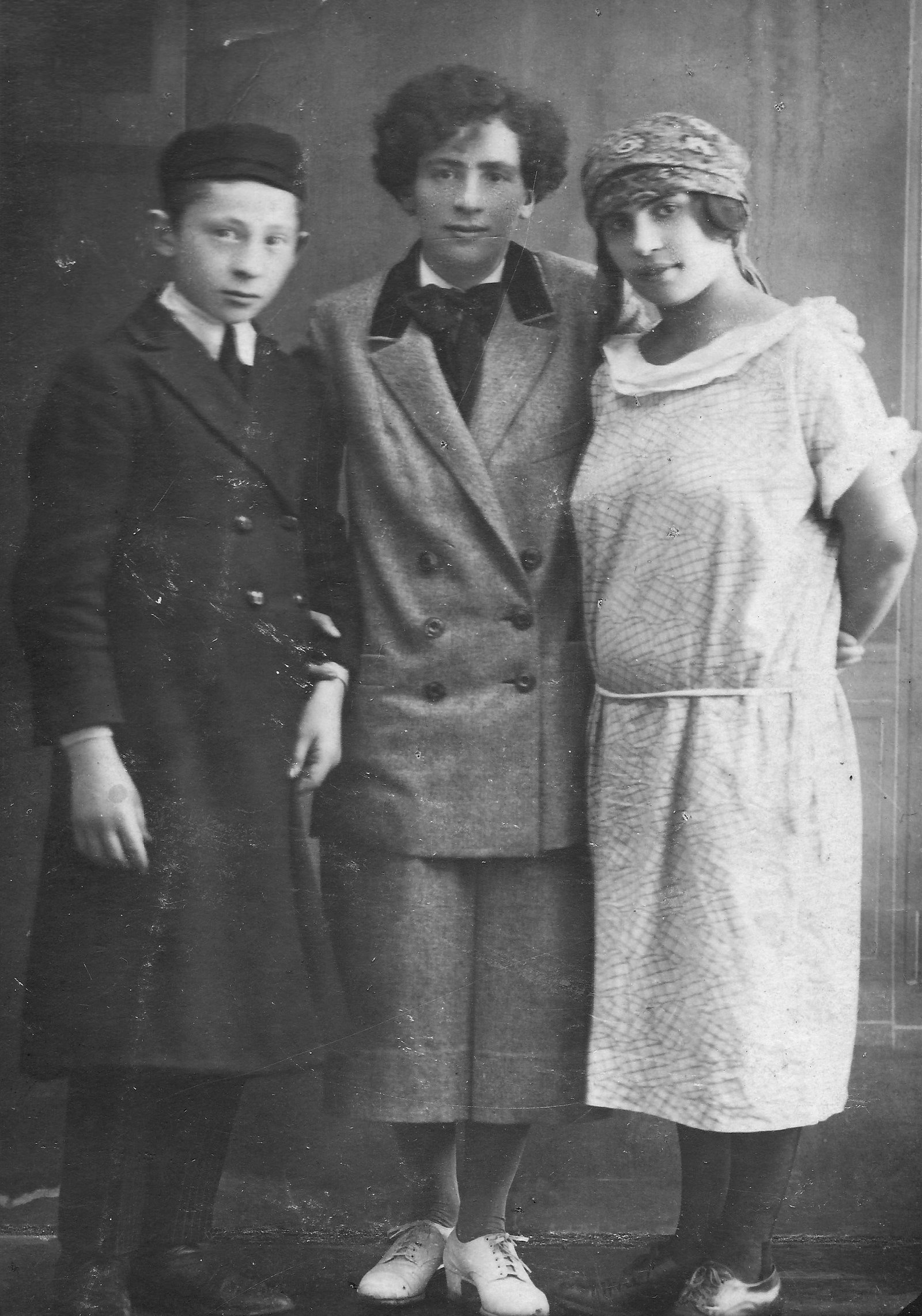
In 1925, Eve Adams, a Polish-Jewish émigré who had spent the past four years travelling across the United States selling leftist radical literature, opened a tearoom in Greenwich Village. Eve’s Hangout, as it was sometimes known, was situated in the basement of 129 MacDougal Street. The small, sparingly lit cellar quickly became a destination among the city’s bohemian contingents—artists, poets, activists, gay men, and lesbians. According to the Daily News, it was rumored that “men kept to one room, the women in another.” The Quill, a downtown periodical, summed it up, mockingly, as a place “where ladies prefer each other.”
One evening in June, 1926, a woman named Margaret Leonard walked into Eve’s Hangout wearing a tweed suit and carrying a briefcase. Adams took to Leonard, and, the next day, they met at Adams’s apartment and rode a taxi to Times Square to see a play. Later, Leonard would report that, in the car, Adams kissed her “profusely,” slid her hand under Leonard’s coat, and touched Leonard’s breasts. At dinner, they waltzed. That night, Adams told Leonard that she wanted to give her a copy of the book she had published the previous year, called “Lesbian Love,” a collection of biographical snapshots of lesbians Adams had known. They returned to her apartment, where Adams gave Leonard a copy and autographed it.
A few days after their outing, Leonard returned to Eve’s Hangout and revealed herself to be an undercover policewoman. Together with four other officers, she arrested Adams for “disorderly conduct”—a broad charge that referred, in this case, to Adams’s alleged sexual advances—and for having written an “obscene” book. After trials for each charge, Adams was sentenced to a year and a half in jail. When she completed her sentence, immigration authorities began deportation proceedings against her. (Although she had begun applying for naturalization in 1923, Adams was not yet an American citizen.) During the hearings, she pleaded to be allowed to stay, but, in 1927, she was sent back to Poland. Her days there were hard. In a letter to a friend, she described her “everyday worry” being “for a piece of bread.” “I cannot steal and I am a stranger-Jew here,” she wrote. She sustained herself on a Ten Cent Classics edition of Tennyson’s poetry, and she eventually managed to move to Paris. Adams’s passport listed her profession as “writer—woman of letters,” but, to support herself, she sold novels to American tourists on the street. After the Nazis occupied France, she tirelessly worked to find a way out of the country, but in late 1943 she was captured and sent to Auschwitz, where she was murdered.
“Lesbian Love,” though long since largely forgotten, might be the first ethnography of lesbians in America. Structured as a series of vignettes, the book—which Adams described as a “scientific literary contribution”—captures scores of women who flirted, courted, or were in love with one another, and some who played with the presentations of their gender. In the opening chapter, “Glimpses,” Adams writes of “a little rendezvous tearoom, late after dinner hour, where six or seven girls had gathered. One lone man sat silent in a corner. Whispers and love sonatas could be heard among the group of girls—occasionally laughter.” The group included women called Ann, Sara (who seemed to be Ann’s lover), and “May, the proprietress, known as Jim.”
Lesbian activist, Sisanda Gumede, 28 was the latest victim of homophobic murder in South Africa when she was stabbed at the weekend.
It is alleged that a 28-year-old lesbian activist, Sisanda Gumede, was stabbed on Sunday afternoon and was rushed to hospital bleeding profusely. She died en route to hospital.
“Although the information regarding the incident violently [sic] is still sketchy, it appears that the deceased and (the suspect) had an altercation while at home. Gumede’s murder is understood to be motivated by homophobia, as (the suspect) allegedly gloated after the incident that he had removed the curse from the family,” the Department of Social Development said in a statement released on Tuesday.
Two men have been arrested and charged in connection to the killing of out lesbian journalist Lyra McKee, who was shot to death while covering a riot in Northern Ireland two years ago.
“These arrests are the culmination of a detailed two-year investigation into Lyra’s murder and the events which preceded it,” Police Service of Northern Ireland Detective Superintendant Jason Murphy said in a written statement. “The local community have supported the Police Service of Northern Ireland throughout the course of this protracted investigation, and I wish to thank them for their continued support.”
A refugee because of homophobia and violence in Mozambique, Lara was assaulted and saw friends being killed and raped for their sexuality. Since 2013, she has lived with her wife and child in São Paulo. … “He punched me in the face, I’ll never forget it,” recalls 37-year-old businesswoman Lara Lopes, referring to one of her memories of life in Mozambique, Southeast Africa, when she was attacked by a man in the street for being a lesbian. Another vivid memory was the day her own family excluded her from dinner. “I never forget the day I went to dinner at my aunt’s house with my cousins. They excluded me, put me in a corner by myself and forbade their women to talk to me”. Both episodes were based on the same reason: homophobia. … Her father, who was very involved in sport, heard other people talking about Lara and left the family because of his daughter’s sexuality. “He always heard something, but he never came to talk about it. One day he left the house, he didn’t tell anyone and when my mother tried to find out why, he said that I was using drugs, but I never did that in my life. I soon understood what was happening”, she says.
In addition to her father’s abandonment, prejudice, according to her, is part of a society strongly influenced by Christian religions, predominantly evangelical ones. “They cursed and yelled in the street, I sometimes heard it, without even knowing where the person was. Sometimes the person would throw something from the top of a building on our heads – there were people who would throw water”.
Other than that, Lara saw even more violent forms of homophobia in the country where it was a crime to be gay until July 2015. “In the south they do a lot. Two friends of mine who couldn’t stand the verbal abuse were murdered. I sometimes ask myself: if I were still in Mozambique wouldn’t that be me?”, she asks.
One of the cases she remembers was the day when a man attacked her at the end of a football game. “It was in a public field in the center of the city, called Campo do Estrela. It’s normal for men to hint, but there are people who swallow it, my friends don’t. The guy wanted to start a fight with us, he went for it completely, cursed us with a lot of names, he punched me in the face. And I’m absolutely sure that if he sees me today, he’ll remember it very well”, she says, disgusted. “These are things you can’t forget, they’re kept there in a little drawer”, she laments.
State violence Homophobia is a legacy of colonialism that prevails to this day in at least 30 African countries which retain the criminalisation of same-sex relationships, or otherwise restrict non-heteronormative sexual practices, according to information from the 2019 State-Sponsored Homophobia report, produced by International Lesbian and Gay Association (ILGA).
Mozambique, which was a Portuguese colony, broke away from its Penal Code that penalised LGBT people in 2015, but no protection was granted in relation to sexual orientation or gender identity, says the report, which also pointed to the Mozambican state’s refusal to register the NGO Lambda Moçambique, which deals with LGBT rights”.
Lambda has been in a legal battle for more than 10 years to be legally recognized by the Mozambican government, despite being the first association for the defense of sexual minorities in the country. The entity’s performance was also part of Lara’s life. “Despite being dangerous, I have always lived with LGBT people, I was part of the direction of Lambda, which is still not accepted by the government. It is not an easy task. Religion influences so much, especially the evangelicals. They think they are the owners of the truth and position themselves as God. My wife’s mother is an extreme evangelical, for example.”
(Translated)
Refugiada por causa da LGBTfobia e da violência do Estado de Moçambique, Lara foi agredida e viu amigas sendo mortas e estupradas por sua sexualidade. Desde 2013, ela vive com a esposa e um filho em São Paulo … “Ele me deu um soco na cara, nunca vou esquecer isso”, lembra a empresária de 37 anos, Lara Lopes, ao se referir a uma das memórias de sua vida em Moçambique, sudeste da África – ela foi agredida por um homem na rua por ser lésbica. Outra recordação viva em sua mente foi o dia em que a própria família a excluiu de um jantar. “Nunca esqueço o dia que eu fui jantar na casa da minha tia, entre primos, eles me excluíram, me colocaram num canto sozinha e proibiram suas mulheres de conversarem comigo”. Ambos os episódios têm o mesmo motivo: LGBTfobia. … O pai, que frequentava muito o meio do esporte, ouvia outras pessoas falando de Lara e abandonou a família por conta da orientação sexual da filha. “Ele ouvia sempre alguma coisa, mas nunca chegou para conversar a respeito. Um dia ele saiu de casa, não falou para ninguém e quando a minha mãe procurou saber o porquê, ele falou que eu estava consumindo drogas, mas eu nunca consumi na minha vida. Logo entendi o que estava acontecendo”, conta.
Além do abandono do pai, o preconceito, segundo ela, faz parte da sociedade influenciada fortemente por religiões cristãs, predominantemente as evangélicas. “Xingavam e gritavam na rua, eu ouvia às vezes, sem nem saber onde é que a pessoa estava. Às vezes a pessoa jogava alguma coisa do alto de um prédio na nossa cabeça, tinha gente que jogava água”.
Fora isso, Lara viu formas ainda mais violentas de LGBTfobia no país em que era crime ser homossexual até julho de 2015. “Chamam a pratica de estupro em pessoas LGBTs de ‘violação cura’, ou ‘violação correctiva’, que agora na África do Sul eles fazem muito. Duas amigas minhas que não aguentavam os desaforos foram assassinadas. Eu às vezes me pergunto: será que se eu estivesse em Moçambique não estaria nessa estatística delas duas?”, questiona.
Um dos casos lembrados por ela foi o dia em que um homem a agrediu ao final de um jogo de futebol. “Foi em um campo público que fica no centro da cidade, chama-se Campo do Estrela. É normal os homens mandarem indiretas, só que tem gente que engole, minhas amigas não. O cara estava com vontade de criar briga com a gente, ele foi pra cima, com tudo mesmo, xingou a gente um monte de nome, ele me deu um soco na cara. E eu tenho a certeza absoluta que se ele me ver hoje, ele vai se lembrar muito bem disso”, conta, revoltada. “São coisas que não tem como você esquecer, está lá guardado numa gavetinha”, lamenta.
Violência do Estado A LGBTfobia é uma herança do colonialismo que impera até hoje em ao menos 30 países africanos que persistem em manter como crime as relações entre pessoas do mesmo sexo ou em restringir práticas sexuais não heteronormativas, segundo informações do relatório Homofobia Patrocinada pelo Estado 2019, produzido pela Associação Internacional de Gays e Lésbicas (ILGA).
Moçambique, que foi colônia portuguesa, se desvencilhou de seu Código Penal que penalizava pessoas LGBT em 2015, mas nenhuma proteção foi concedida em relação à orientação sexual ou identidade de gênero, diz o relatório, que também apontou a negação do Estado moçambicano em registar a ONG Lambda Moçambique, que trata dos direitos LGBTs “.
Lambda está há mais de 10 anos em uma batalha jurídica para ser reconhecida legalmente pelo governo moçambicano, apesar de ser a primeira associação de defesa de minorias sexuais no país. A atuação da entidade também fez parte da vida de Lara. “Apesar de ser perigoso, eu sempre convivi com pessoas LGBTs, fiz parte da direção da Lambda, que até agora não é assumida pelo governo, não é uma tarefa fácil. A religião influencia ainda mais, principalmente na parte dos evangélicos, eles se acham os donos da verdade e se colocam na posição de Deus. A mãe da minha esposa é evangélica extremista, por exemplo”.
Family, friends and members of the LGBTIQ+ community in Limpopo have been left reeling by the brutal rape and murder of a young lesbian community health worker, in what is suspected to be a hate crime.
A young lesbian community health worker was raped, stabbed multiple times and dumped alongside the road next to Helen Franz Hospital in the rural Senwabarwana area of Limpopo last week.
Thapelo Constance Sehata (23), of Desmond Park in Senwabarwana, was found on Wednesday (28 July 2021) unconscious and bleeding from severe stab wounds, just a short distance from the hospital.
She later succumbed to her injuries, following what her family and fellow members of the LGBTIQ+ community described as a hate crime motivated by her sexual identity. Police have confirmed the incident.
Sehata was a mother of a nine-year-old girl and worked as peer educator at the non-governmental organisation (NPO) Centre for Positive Care (CPC).
Her distraught older sister, Pretty Sehata (31), told Health-e News this week that the whole family, including their 63-year-old mother, was hurt beyond words.
“Thapelo was open about being lesbian and we accepted and loved her as our own in the family. Of course, there were some residents who would mock, insult and ridicule her for what she was. And here we are in pain today, mourning her brutal killing. She was raped, killed and dumped along the road as if she was not human,” said Pretty.
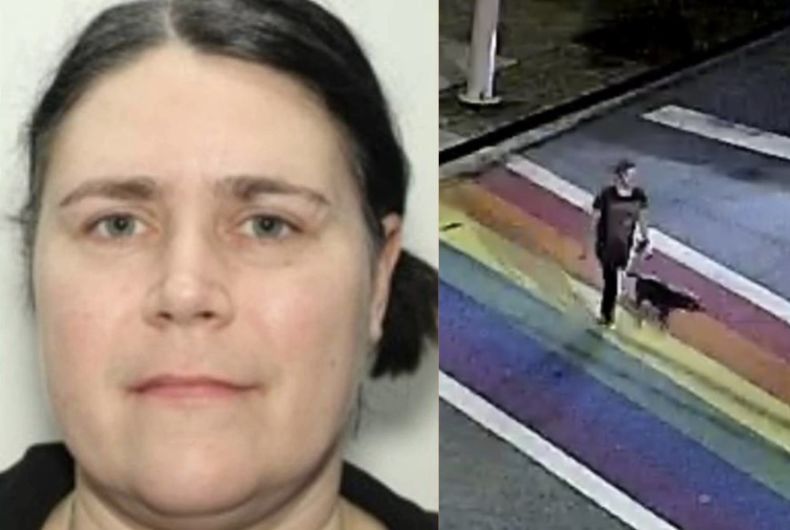
This past Wednesday at 1 a.m. in Piedmont Park the bodies of Katherine Janness, 40, and her dog Bowie were found. Janness had been stabbed multiple times, her face disfigured in the attack.
“She was the most intelligent, kind, humble, and beautiful person I have ever known. I wanted to spend every second with her,” her fiancee Emma Clark wrote on Facebook.
“Today I lost the love of my life and my baby boy. It was tragic.”
Janness – a bartender at the Campagnolo Restaurant and Bar in Atlanta – and Clark had dinner together on Tuesday evening and then Janness took Bowie for a walk. When she didn’t come home, Clark found her body by using an app to track her phone’s location in the park about a mile from their home.
Police searched the park for evidence and went door-to-door in the neighborhood to find witnesses. They returned to the park with diving gear to search a lake.
The last known picture of Janness shows her crossing a nearby rainbow crosswalk. Atlanta police released the image and are offering a $10,000 reward for information on the killing.
5 July 2021: A Connecticut double murder-suicide may have been pushed by the killer’s homophobia, the household of one of the victims mentioned.
David Knowledge, 65, killed himself Friday in his Windsor Locks house after he shot his spouse, her daughter and an 18-year-old girl mentioned to be the daughter’s lover, The Journal Inquirer reported.
His spouse, Delores Tracey Knowledge, 44, and pal Lauren “Lela” Leslie died – however the unnamed daughter survived and was handled for a number of gunshot wounds at an area hospital, The Hartford Courant mentioned.
Leslie’s brother Jhavier Leslie informed the Courant the household needed an investigation to see if the crime was “rooted in hate.”
“It’s arduous to undergo this new actuality of not having her right here, however I feel it is a half of an even bigger situation in society that should be addressed of simply homophobia and the risks round that,” Leslie mentioned, based on the Courant.
“She spent her entire life barely speaking as a result of she was afraid of who she was and she or he lastly gained the power to understand who she is, so it’s very troublesome for me to know that now, her being her true self and dwelling in her actuality, that is the outcome of that in my eyes,” he added.
Massimo Sebastiani was sentenced to 20 years for the murder of Elisa Pomarelli, the young friend he strangled in August 2019 and whose body was hidden by the murderer in the hills in the province of Piacenza. The prosecutor had asked for 24 years for Sebastiani, who was arrested after a few days on the run hidden in the hills, before being accused of murder and concealment of a corpse.
The wrath of Elisa’s family – “This is not justice, 20 years is so short. She deserved a life sentence”, said the victim’s family after dscovering the sentence. Elisa was strangled by a man she had considered a friend. Sebastiani, on the other hand, was convinced that Elisa was his girlfriend. After killing her, the 47-year-old worker sent messages to Elisa with the intention of throwing off the investigation. (Translated)
Massimo Sebastiani è stato condannato a 20 anni per l’omicidio di Elisa Pomarelli, la giovane amica che nell’agosto del 2019 venne strangolata e il cui corpo fu nascosto dall’assassino sulle colline in provincia di Piacenza. La procura aveva chiesto 24 anni per Sebastiani, arrestato dopo alcuni giorni in fuga nascosto sulle colline, imputato per omicidio volontario e occultamento di cadavere e processato in abbreviato.
L’ira della famiglia di Elisa – “Questa non è giustizia, 20 anni sono pochi. Meritava l’ergastolo”, hanno detto i familiari della vittima dopo la lettura della sentenza. Elisa fu strangolata da quello che considerava un amico. Sebastiani, invece, era convinto che Elisa fosse la sua fidanzata. Dopo averla uccisa l’operaio 47enne inviò dei messaggi a Elisa con l’intenzione di depistare le indagini. (Original)
Part two of this extract, the first part of which the Mail & Guardian published last week, lists the names of black lesbians who were murdered between 2007 and 2018, allegedly because of their sexual orientation.
On the morning of June 22, at the age of 39, Ana Paula Campestrini was executed with 14 shots when she arrived home. The entire event, which lasted about ten seconds, was recorded by the security cameras of the condominium where she lived, in Curitiba (PR). …
Living a personal process of discovery, Ana discovered that she was a lesbian and asked for a divorce from her husband, butr never from the children. From that point she was subjected to blackmail and threats from her ex, lawyer Wagner Oganauskas. …
“The only thing she wanted was to be able to be happy being who she was [a lesbian woman] and to be able to have contact with her children. And she was taken from our lives,” said Luana, in a choked voice, over the phone, as she headed to the demonstration for justice by Ana Paula. On Sunday (27 June), dozens of people walked through the central streets of Curitiba asking for the investigation into her murder to be prioritised. Two suspects have been arrested: Wagner Oganauskas, ex-husband of Ana Paula, and a friend of his, Marcos Antônio Ramon. (Translated)
Na manhã de 22 de junho, aos 39 anos, Ana Paula Campestrini foi executada com 14 tiros ao chegar em casa. Quatorze. Toda a ação, que dura cerca de dez segundos, foi registrada pelas câmeras de segurança do condomínio onde ela morava, em Curitiba (PR). …
Vivendo um processo pessoal de descobertas, Ana se entendeu lésbica e pediu o divórcio. Do marido. Nunca dos filhos. Mas desde então passou a sofrer chantagens e ameaças do ex, o advogado Wagner Oganauskas. …
“A única coisa que ela queria era poder ser feliz sendo quem ela era [uma mulher lésbica] e poder ter contato com os filhos. E ela foi arrancada das nossas vidas”, desabafou Luana, com a voz embargada, por telefone, enquanto se dirigia à manifestação por justiça por Ana Paula. No domingo (27), dezenas de pessoas caminharam pelas ruas centrais de Curitiba pedindo celeridade na apuração do crime. Dois suspeitos foram presos: Wagner Oganauskas, ex-marido de Ana Paula, e um amigo dele, Marcos Antônio Ramon. (Original)
This is an edited extract from the book Femicide in South Africa (Kwela) by Nechama Brodie.
In 1990, the year that Nelson Mandela was released, Johannesburg held the very first Gay and Lesbian Pride march, at which Simon Nkoli, Beverly Ditsie and Justice Edwin Cameron were among the speakers. The marchers chanted, “Out of the closet and into the streets.”
It was a significant moment, even though it would take several more years before gay, lesbian, bisexual, transsexual and intersex (LGBTI) individuals would be granted similar rights and protections as hetero- and cis-sexual South Africans, first under an interim and then a final constitution that prohibited discrimination on the basis of sexual orientation and gender.
Between 1994 and 2005 a number of legal amendments were made and new laws introduced that formalised rights of lesbian, gay, bisexual, transgender and intersex individuals. The criminalisation of sodomy was declared unconstitutional. Same-sex partners were granted similar rights in terms of immigration and financial benefits as those granted to different-sex spouses or partners. Trans and intersex individuals were allowed to change their legally recognised sex. Same-sex couples were allowed to jointly adopt children or adopt each other’s children. Lesbian couples were allowed to be registered as the natural, legitimate parents of a child that one of them had born.
There were also challenges to the constitutionality of the Marriage Act, which did not then allow for same-sex unions to be recognised as marriages. By late 2005, the Constitutional Court ruled that the Marriage Act was unconstitutional and gave parliament one year in which to remedy the matter.
But being “out of the closet” also meant that LGBTI individuals were more openly targeted for hate, harassment, victimisation and violence — even as these new laws were passed supposedly protecting their rights. Although this text focuses on violence against black lesbians, it is important to note that the growth in hate crimes was experienced by all members of the LGBTI community, with transgender individuals experiencing even higher levels of violence, as a group, than lesbians or gay men.
Black lesbians face double jeopardy This is also a good place to discuss why this is about “black lesbians” and not just lesbians, and also what the concept of “black lesbians” represents as a group, even though it is quite obviously made up of individual black women who are by no means homogenous because of their sexual preference.
In Nonhlanhla Mkhize, Jane Bennett, Vasu Reddy and Relebohile Moletsane’s book The Country We Want to Live In: Hate Crimes and Homophobia in the Lives of Black Lesbian South Africans (HSRC Press, 2010), they note that, although there were risks to “singling out a particular group of people as targets of gender-based violence”, black lesbians were “doubly vulnerable”.
This was because, firstly, although all women in South Africa were vulnerable to violence, there was a correlation between increased poverty and increased vulnerability and, in South Africa, being black meant there was a greater association with being poor or having less access to resources. Not only did black women live in environments in which, just as other black women, they were vulnerable to attack, they also lived in places in which cultures were often deeply homophobic and in which sexual violence had become a “popular weapon”.
In the 1980s, the country’s ongoing rape crisis had started to take on chilling new aspects, including gang rapes that became known as “jackrolling”. Jackrolling initially involved the selection and abduction of a victim, usually a woman who (her attackers believed) presented herself as if she was “better than them” and “out of reach”. There were echoes of these sentiments in the growing number of stories that began to emerge during the 1990s of black lesbian women being targeted, being beaten and raped by men, supposedly as a means of “teaching them how to be proper women”.
This gradually became referred to as “curative” or “corrective” rape, and involved three distinct aspects: one was punishment of the woman, for her choice of sexual identity and her lifestyle; a second was the humiliation of the victim — as with jackrolling, this was often achieved through gang rapes; the third was the repulsive misnomer of “transforming” lesbians into heterosexual women through violent penetration.
Even as newspapers carried the occasional story about black lesbians’ struggles for acceptance individually or within their communities in the context of the changing legislative landscape, almost every single one of these women’s accounts also included incidents of violence, most frequently rape. Sometimes these women were even raped with the knowledge of their family members, who either actively encouraged the assault in the hope of ridding the young woman of her homosexuality, or tacitly accepted such attacks as what should happen to “girls like that”.
















 Listening to Lesbians