Tag Archives: lesbian activism

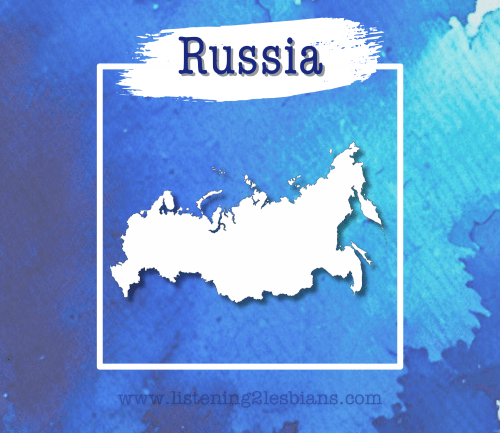
Being a lesbian in Russia means living in fear

Elena Kostuchenko is a Russian journalist in exile who has risked her life to give a voice to the silenced people in her country, especially the LGBTQI+ community. Her story is that of a woman who has faced threats, violence and censorship, but who has never stopped fighting. Her book El meu país estimat (My Beloved Country), recently published in Catalan, collects testimonies and chronicles published in the newspaper Nóvaya Gazeta , the last independent media outlet in Russia, which was closed down for its critical stance against Vladimir Putin’s regime.

Being a lesbian in Russia is not only a personal challenge, but a matter of survival, as she explains in an interview with El Diario. “In my country, I can’t be at peace as a woman, let alone as a lesbian,” says Kostuchenko. Homophobia is not just a social prejudice, but a state policy. Laws against “LGBTQ+ propaganda” prevent any kind of visibility, and violence against the community is common. “At the first Pride march in Moscow I participated in, I ended up in the hospital after being attacked by protesters,” she recalls.

Original:

Ielena Kostyutxenko (Iaroslavl, 1987) es una periodista rusa en el exilio que ha arriesgado su vida por dar voz a las personas silenciadas en su país, especialmente a la comunidad LGTBIQ+. Su historia es la de una mujer que ha enfrentado amenazas, violencia y censura, pero que nunca ha dejado de luchar. Su libro El meu país estimat (Mi país querido), recientemente publicado en catalán, recoge testimonios y crónicas publicadas en el diario Nóvaya Gazeta, el último medio independiente de Rusia, que fue clausurado por su postura crítica contra el régimen de Vladímir Putin.

Ser lesbiana en Rusia no solo es un desafío personal, sino una cuestión de supervivencia, y así lo cuenta en una entrevista a El Diario. “En mi país, no puedo estar tranquila siendo mujer, y mucho menos siendo lesbiana”, afirma Kostyutxenko. La homofobia no es solo un prejuicio social, sino una política de Estado. Las leyes contra la “propaganda LGTBIQ+” impiden cualquier tipo de visibilidad, y la violencia contra la comunidad es frecuente. “En la primera marcha del Orgullo en Moscú en la que participé, terminé en el hospital tras ser agredida por manifestantes contrarios”, recuerda.

Continue reading at: https://mirales.es/ielena-kostyutxenko-ser-lesbiana-en-rusia-significa-vivir-con-miedo/ (Source)

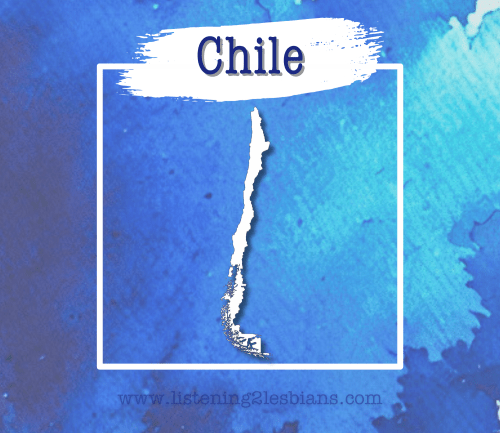
Chile: Plaque for Monica Briones and lesbophobic hate crime victims

In a milestone event for lesbian women, lesbian-feminist groups yesterday installed a plaque commemorating Mónica Briones and all the victims of lesbian hatred in downtown Santiago.
The space was set up by lesbian-feminist collectives in Merced with Irene Morales, the same place where Mónica was murdered in 1984. Her case is the first documented lesbian-hate crime in Chile, following years of investigation by journalist and founder of Rompiendo El Silencio, Érika Montecinos.
In a milestone event for lesbian women, lesbian-feminist groups yesterday installed a plaque commemorating Mónica Briones and all the victims of lesbian hatred in downtown Santiago.

The plaque was installed in Merced and Irene Morales (the same place where Monica was murdered on July 9, 1984), following years of collective efforts by the groups Rompiendo El Silencio, Red Lesbofeminista, La Crisis, Burdas, and the Frente Musical Combatibe, among others.

“Commemorative space: to all the women victims of lesbian hatred.
Mónica Briones Puccio (July 7, 1950–July 9, 1984) was murdered on this corner.
She was an out lesbian, Chilean painter, sculptor, and artist. The brutal, unjust crime against her was used as an example to promote July 9 as Lesbian Visibility Day in Chile,” the plaque reads.

Continue reading at: https://www.movilh.cl/hito-inauguran-en-el-centro-de-santiago-una-placa-en-memoria-de-monica-briones-y-de-las-victimas-del-lesbo-odio/ (Source)

Ugandan lesbian activist Kasha Nabagesera one of BBC’s 100 inspiring and influential women

“The British Broadcasting Corporation (BBC) has named Ugandan LGBTQ+ rights activist Kasha Jacqueline Nabagesera to its list of this year’s “100 inspiring and influential women from around the world”.”

“The BBC said about Nabagesera: “Homosexual acts are illegal in Uganda, punishable by prison sentences – and LGBTQ+ advocate Kasha Nabagesera is fighting to change these repressive laws. As an openly gay woman, she has made a profound impact campaigning against LGBTQ+ stigma across Africa. Nabagesera has successfully sued newspapers and the Ugandan government for anti-LGBTQ+ rhetoric: she has twice challenged anti-homosexuality laws in Ugandan courts and is currently challenging a 2023 act.”

Continue reading at: https://76crimes.com/2024/12/30/bbc-lists-ugandan-lesbian-activist-among-worlds-100-inspiring-and-influential-women/ (source)

It has also been reported that “for the first time since Uganda’s Anti-Homosexuality Act (AHA) 2023 came into force, cases of homophobia-driven arrests have topped the list of human rights violations against known or suspected LGBTQI+ persons, overtaking violence and evictions, according to a report just published by the Human Rights Awareness and Promotion Forum (HRAPF).”

Continue reading at: https://76crimes.com/2025/02/19/anti-lgbt-arrests-rising-in-uganda/ (source)

ILD: The Incredible Story of Del and Phyllis

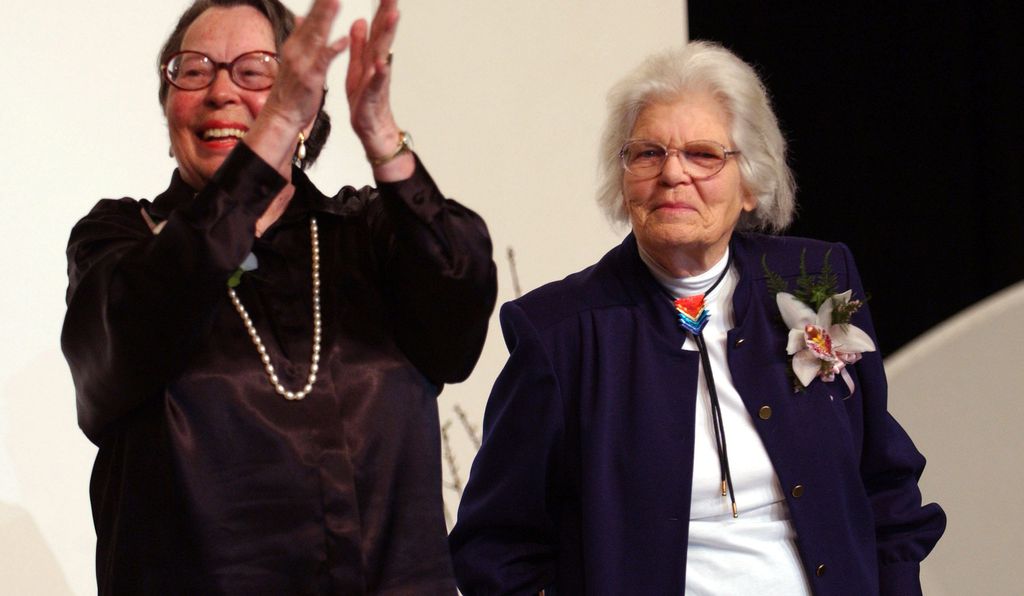
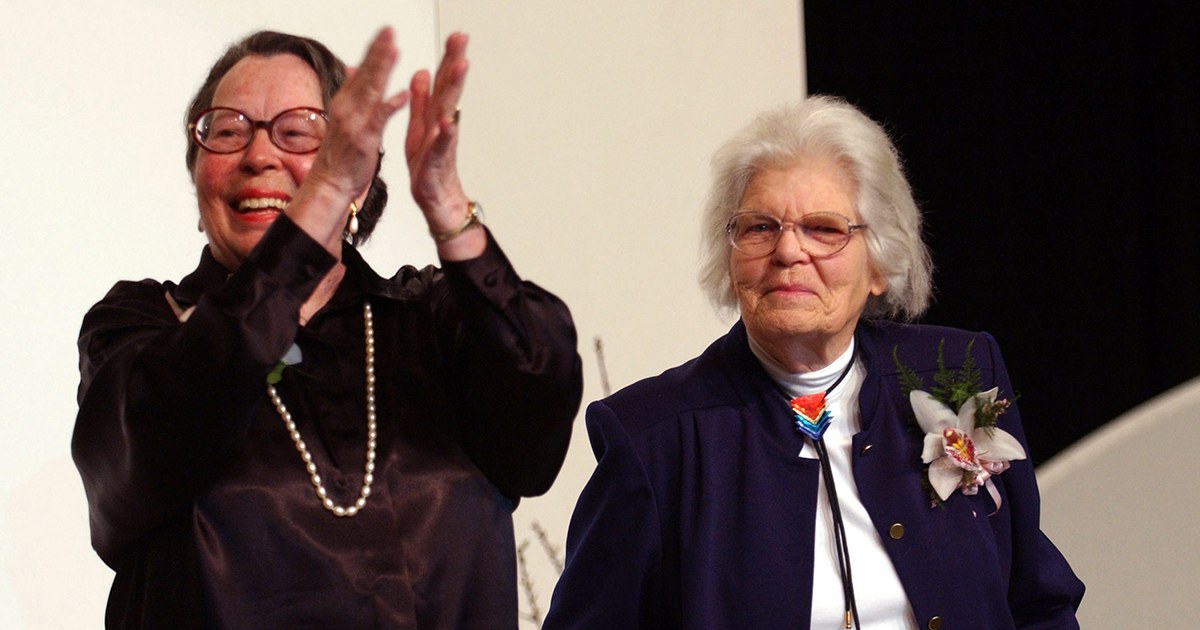
In 2008, after 55 years together, Del Martin, age 87, and Phyllis Lyon, age 84, were finally wed in San Francisco, but it was for the second time. Four years earlier, before same-sex marriage was legalized in the state of California, during a large ceremony honoring their long-standing contributions to LGBTQ activism, they were the first of 90 gay couples to be married illegally by the city’s then-mayor Gavin Newsom.

When Martin and Phyllis made their initial vows as San Francisco’s first same-sex couple, the ceremony was conducted so that their union could potentially be included in a lawsuit to champion marriage equality in the United States. The director of the National Center for Lesbian Rights, Kate Kendell, invited them with this promise: “This will hopefully be the last thing the movement will ever ask you to do, but do you wanna get married?”

As lesbian history was unfolding in the 1950s, it was Del and Phyllis who gathered in the home of their friend Rose Bamberger and her partner Rosemary Sliepen and founded the Daughters of Bilitis (DOB), the first lesbian organization in the country. Martin and Lyon would soon become co-editors of the Ladder, DOB’s publication, and grow the readership even amid an era of pervasive homophobia. The pair was also the first lesbian couple to join the National Organization for Women, as feminist causes also spurred their organizing work.

Over the next five decades, Martin and Lyon never stopped organizing, and gradually, thanks in no small part to their efforts, LGBTQ visibility shifted from secrecy to “out and proud” activism.

Continue reading: https://www.smithsonianmag.com/smithsonian-institution/incredible-story-lesbian-activists-del-martin-and-phyllis-lyon-180978309/ (source)

India: From “Darling Chef” to “Dirty Lesbian”

by Ritu Dalmia

chef

The next two years were strange for me. I had a constant barrage of nasty messages being posted on my Twitter account. Until then, I was only used to getting fan mail. I had the word ‘lesbian’ sprayed on my car window, a stone was hurled at me, a man spat at me at the Delhi airport in front of everyone… I was no longer the darling chef of the country but the dirty lesbian who had the cheek to file this petition.

Yes, there were times when I regretted my decision, when I wondered if I had acted foolishly. The strange part was that after a few agonising hours of self-doubt, I always arrived at the same answer: I had done the right thing by filing the petition, and if I didn’t do anything I had no right to complain, like Ella had said to me.

6 September 2018: It was 6 am in London – where I was on work – when the judgment was read out in the Supreme Court of India. I was stunned, shocked and so happy that my jaw started hurting.

When I had decided to file this petition, I truly did not believe that I would see a change happening in my lifetime. And on this day, two years after filing the petition, history was finally being rewritten. I am not an activist and never wanted to be one; yet for me this was my life’s biggest accomplishment and nothing else in my life till then had ever given me this sense of pride.


Spinifex Press: Celebrating Radical Lesbian Publishing

Sue_and_Renate Spinifex Press

by Claire Heuchan

AfterEllen.com

Spinifex was founded in March of 1991 by Susan Hawthorne and Renate Klein. The press began as a pushback to the cuts that threatened feminist and literary publishing during Australia’s recession. Susan and Renate started out with four titles. Since then, Spinifex has gone from strength to strength. They publish everything from fiction to poetry to political tracts.

Almost 30 years on, Spinifex Press has now published over 200 books. They’ve shared writing by some of the most relevant and necessary voices in the modern feminist movement. Among their authors are Robin Morgan, editor of the iconic Sisterhood is Powerful anthology, and Rachel Moran, an abolitionist campaigner. Other notable writers include Julie Bindel, Unity Dow, and Sheila Jeffreys.

Continue reading: https://www.afterellen.com/general-news/574816-spinifex-press (Source)

Violence Against Lesbians – A Powerful Panel at #FiLiA2019

by Claire Heuchan
AfterEllen.com

There aren’t enough spaces where violence against lesbians can be openly discussed. But FiLiA – Britain’s biggest feminist conference – is one of them. The Violence Against Lesbians panel took place in the Bradford Hotel on Saturday 19th October. Over a hundred women attended the session. Consuelo Rivera-Fuentes, Susan Hawthorne, Hilary McCollum, and Angela Wild made up the panel, chaired ably by Sally Jackson.

The purpose of FiLiA, as Sally opens by reminding us, is to amplify women’s voices. In particular, to amplify the voices of women who are seldom heard and often silenced. Lesbians’ voices aren’t always listened to – in mainstream society, feminist spaces, or even the LGBT community. And so, if the numbers are anything to go by, a lot of women feel a sense of relief that lesbians are a priority at FiLiA.

Continue reading: https://www.afterellen.com/general-news/573318-violence-against-lesbians-a-powerful-panel-at-filia2019 (source)

20 Lesbophobic Things My Male Friends Have Said to Me

by Amy Dyess

Several of my straight, gay, and bi male friends said those lesbophobic things to me. I’m butch and look very gay, which made me a visible target for sexual harassment. It’s partially why I moved from the American South, where all of this happened. I decided to share because recently the memories have been triggered. I want them out, and maybe writing about my experiences will help other lesbians.

Male friendships are tricky, no matter what a man’s orientation is. As you can see, many straight and bi male friends are really trying to hook up. Gay men project their own fears onto lesbians. Gay men have also groped me in dark, sweaty gay bars. Lesbians have to be careful around all men.

Continue reading: 20 Lesbophobic Things My Male Friends Have Said to Me by Amy Dyess (source)

Brazil: The lesbian activist who defends LGBT rights in the Amazon

dani-lesbiana-indigena

Dani is the indigenous woman who stars in the second chapter of ‘Rainforest Defenders’ and one of the leaders, at only 21 years old, of the Amazonian resistance to the logging, mining and agrarian threat. But Dani is something else. She is one of the first indigenous women to say openly that she is a lesbian and use her visibility to fight for the LGTB cause in the Amazon.

She belongs to one of the communities that live on the banks of the Tapajós River, a mixture of ancient native settlers, indigenous people, descendants of African slaves and whites of Portuguese origin. Communities that are trying to avoid the exploitation and destruction of their land.

Dani’s community has an advantage over the majority, as it is considered [in] a Conservation Reserve, and therefore temporarily protected from indiscriminate extraction. But the young woman still has to fight against the threats that the extensive cultivation of soy exerts on her land and also against the prejudices of her own community, of the evangelist church, religion they profess, and of her own family .(Translated)

Dani es la indígena que protagoniza el capítulo segundo de ‘Rainforest Defenders’ y una de las líderes, a sus solo 21 años, de la resistencia amazónica frente a la amenaza maderera, minera y agraria. Pero Dani es algo más. Es una de las primeras indígenas en decir abiertamente que es lesbiana y usar su visibilidad para luchar por la causa LGTB en la Amazonia.

Pertenece a una de las comunidades que viven a la vera del río Tapajós, mezcla de antiguos pobladores autóctonos, indígenas, descendientes de esclavos africanos y blancos de origen portugués. Comunidades que están tratando evitar la explotación y destrucción de su tierra.

La comunidad de Dani tiene cierta ventaja frente a la mayoría, pues está considerada como una Reserva de Conservación, y por tanto, protegida temporalmente de la extracción indiscriminada. Pero la joven sigue teniendo que luchar contra las amenazas que el cultivo extensivo de soja ejerce sobre su tierra y también contra los prejuicios de su propia comunidad, de la iglesia evangelista, religión que profesan, y de su propia familia.
(Original)

Continue reading at: http://www.mirales.es/dani-la-indigena-lesbiana-que-defiende-los-derechos-lgtb-en-la-amazonia/ (Source)

Chicago, USA: Lesbian Activist, professor Jackie Anderson dies

JackieAnderson

Chicago lesbian pioneer and civil-rights activist Jackie Anderson died after a short illness on Jan. 7, surrounded by family and friends. She was 75. Anderson is survived by her daughter Tracey Anderson and her grandson Torrence “Doc” Gardner. The family requests privacy at this time.

Born in Chicago, Anderson graduated from Roosevelt University and retired from a long career as assistant professor of humanities and philosophy at Olive-Harvey College, where she started work in 1975. She twice served as department chairperson. Her brilliant academic mind was among things her friends remembered most about Anderson. A steadfast feminist, she especially supported African American lesbian projects on Chicago’s South Side.

Continue reading at: http://www.windycitymediagroup.com/lgbt/PASSAGES-Activist-professor-Jackie-Anderson-dies/61537.html (Source)

Who was Jackie Forster? Google Doodle pays tribute to lesbian pioneer

Following her divorce, Forster embraced her gay identity. She moved in with her girlfriend in the mid-1960s, although she would not officially “come out” until 1969. When she did, it was in spectacular style, The Independent recalled in her 1998 obituary, “announcing to the world at Speaker’s Corner: ‘You are looking at a roaring dyke!’”.

Continue reading at: http://www.theweek.co.uk/89514/who-was-jackie-forster-google-doodle-pays-tribute-to-lesbian-pioneer (Source)

5 lesbian activist groups who fought for us

Lesbians have always been at the forefront of the fight for LGBT rights, but sometimes lesbian activist groups were needed to fight for space on lesbian rights and issues.  This is because, as Canadian journalist and activist Judy Rebick had noted, that while lesbians were part of the women’s movement, their issues were invisible in the movement.  Aside from Daughters of Bilitis to the Lesbian Avengers, here are five more groups that let people know that lesbians can’t be pushed around.

Continue reading at: 5 lesbian activist groups who fought for us | Lesbian News (Source)

Honoring Del Martin, Lesbian Rights Pioneer

Sometimes you just want to fox-trot or cha-cha. Since it was often illegal for same-sex couples to dance together in public places in the 1950s, Del Martin and her partner, Phyllis Lyon, founded the Daughters of Bilitis, one of the first lesbian organizations in the United States, in 1955. But the DOB was much more than just a place to dance freely: In those dark days, it was a beacon of light, a refuge, and a bit of a miracle.

Continue reading at: Honoring Del Martin, Lesbian Rights Pioneer – Vogue (Source)